

10 Proven AI Marketing Tactics for Explosive Growth in 2025 (Steal These Before Your Competitors Do)
If you’re still guessing what works in marketing, This playbook shows you exactly how to use AI to get more traffic, leads, and sales even if you have a tiny team. Download the Free AI Marketing Playbook (no spam, just pure strategy).
AI Marketing represents a fundamental shift in how businesses understand audiences, design campaigns, and measure success across search, social, email, and paid media. It turns fragmented data into a single, intelligent foundation for decision-making instead of relying on isolated reports or gut feel. This makes it much easier for brands to react quickly to market shifts, algorithm changes, and evolving customer expectations.
Instead of manually interpreting scattered analytics from multiple tools, teams now use AI platforms that aggregate data from websites, apps, CRM systems, and advertising networks into unified dashboards. These systems surface anomalies, patterns, and emerging opportunities in near real time. Marketers can instantly see which audiences are warming up, which pages are leaking traffic, and which touchpoints are driving the most profitable conversions.
This unified view unlocks a more accurate picture of customer behavior—who is visiting, what they care about, how they navigate, and when they are most likely to convert. AI Marketing systems can even detect micro-intents, such as research mode versus ready-to-buy behavior, based on subtle interaction signals. That level of clarity is crucial when attention spans are short and acquisition costs are high.
For brands trying to stand out in crowded feeds and search results, AI Marketing becomes the backbone of smarter, more relevant engagement. Predictive models help determine the best times to launch campaigns, which messages to prioritize, and what mix of channels will deliver the highest return. This reduces wasted budget on broad, unfocused outreach and shifts investment toward initiatives with the strongest upside.
Crucially, this intelligence does not replace creativity—it amplifies it. AI in digital marketing gives strategists and creators richer insights about their audiences, so they can craft stories, visuals, and experiences that resonate more deeply. With the heavy lifting of data crunching handled by machines, creative teams have more time to experiment, test bold ideas, and refine brand narratives across touchpoints.

The Rise and Scope of AI Marketing
In just a few years, AI Marketing has moved from experimental pilots to mission-critical systems embedded across the entire funnel. Early implementations often focused on single features like smart bidding or basic chatbots, but now AI underpins research, planning, content, distribution, and measurement. This end-to-end adoption shows how central AI has become to modern growth strategies.
Today’s platforms span audience discovery, content production, personalization, media optimization, lifecycle automation, and even sales enablement. Natural language processing helps decode what customers say in reviews or support messages, while machine learning reveals how they behave across touchpoints. Generative models then turn these insights into creative starting points, from ad concepts to nurture flows.
At the data layer, AI Marketing thrives on integrating once-siloed sources—web analytics, CRM events, ecommerce transactions, customer service logs, call transcripts, and offline interactions—into unified customer views. Algorithms cluster users into dynamic segments based on real behavior rather than static demographics. This enables messaging like “price-sensitive repeat shoppers on mobile” instead of vague “returning customers,” which drives far more precise campaigns.
This shift from traditional segmentation to behaviorally driven intelligence lets brands allocate budget and creative energy where it has the most impact. Resources can focus on high-value audiences, promising keywords, and underused formats that AI identifies as emerging growth levers. The result is more efficient spend, stronger engagement, and clearer attribution across channels.
Importantly, the scope of AI Marketing spans both growth and efficiency. On the growth side, AI helps uncover new segments, surface trending topics, and spot fresh content angles before competitors respond. On the efficiency side, automation handles repetitive tasks such as tagging, QA checks, reporting, and basic campaign setup. Studies show most marketers now use AI tools daily, especially for analytics and content optimization, which shows how deeply these capabilities are woven into modern workflows.
AI Marketing in Digital Advertising and Campaign Optimization
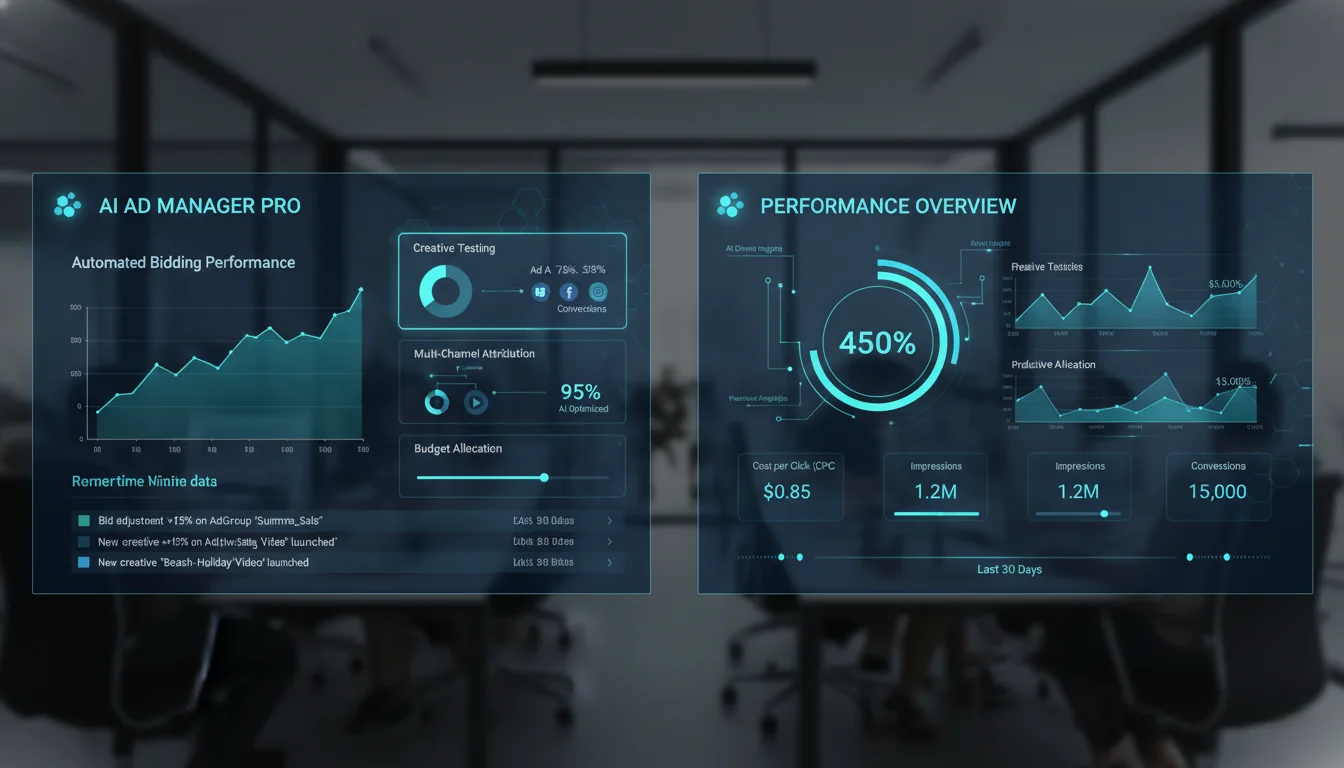
Among all areas transformed by AI Marketing, digital advertising is one of the most disrupted and optimized. Modern ad platforms rely heavily on AI to handle audience targeting, bidding strategies, and creative delivery across search, social, display, and video. This allows campaigns to adapt continuously as auction conditions, competition, and user behavior change.
Marketers now define clear objectives—like maximizing conversions, revenue, or qualified leads—while AI systems decide how to distribute spend in real time. Algorithms evaluate signals such as search queries, browsing history, device types, and contextual page content to predict the likelihood of desired actions. Bids and placements automatically adjust to meet those goals under budget constraints.
Creative is undergoing an equally important AI shift. Tools can generate multiple versions of headlines, descriptions, images, and video snippets that match brand guidelines yet differ enough to test performance. Instead of manually building every A/B variation, marketers set strategic parameters and let generative systems create options at scale. Over time, performance data reveals which angles, formats, and tones work best with each audience slice.
AI Marketing also makes cross-channel orchestration more cohesive. Rather than treating search, social, email, and display as isolated efforts, AI analyzes how users move between channels and recommends or automates sequences that mirror real behavior. Someone who watches a video ad might later see a tailored search ad, then receive an email or on-site experience that continues the same narrative. This continuity reduces wasted impressions and strengthens message recall.
For performance-focused teams, this integrated approach is particularly powerful. AI in digital marketing enables granular attribution models that estimate each touchpoint’s contribution to conversions. Marketers can shift budget toward the combinations of channel, creative, and audience that consistently deliver profitable results, improving return on ad spend while cutting unproductive placements.

Generative AI for Ad Retargeting: Human-Centric Personalization
Generative AI for ad retargeting is one of the most nuanced and high-impact applications of AI Marketing today. Traditional retargeting often shows the same static banner repeatedly to anyone who visited a product page or added an item to cart, which quickly feels repetitive and intrusive. Generative systems instead adapt ad copy, visuals, and offers dynamically based on each person’s journey.
A user who only browsed once might be retargeted with educational content, reviews, or comparisons that build trust and understanding. A cart abandoner could see messaging that addresses friction points such as delivery times, returns, or payment options. Loyal customers might receive loyalty perks, bundles, or early access instead of generic discounts. These subtle differences help retargeting feel more like guidance than pressure.
Under the hood, generative AI for ad retargeting analyzes granular performance data to see which creative elements drive engagement and conversions for specific micro-segments. Models evaluate variations in headlines, images, formats, and calls to action, then automatically promote top-performing combinations and phase out weaker ones. This continuous experimentation would be almost impossible for humans to manage at comparable scale.
Brands can set guardrails to ensure retargeting stays on-brand and safe. Marketers define tone, messaging constraints, and visual guidelines so that generative outputs respect legal requirements, cultural nuances, and brand identity. Teams also decide which behaviors should trigger retargeting and for how long, preventing the “endless chase” effect that frustrates users. With these controls in place, AI becomes a creative partner rather than an unchecked automator.
A human-centric mindset is essential to keep AI-driven retargeting helpful rather than creepy. This includes clear frequency caps, honoring user opt-outs, and avoiding sensitive inferences around topics like health or personal finance. Marketers can provide preference centers and short explanations about why certain ads appear and how to adjust settings. When generative AI for ad retargeting is anchored in value—reminding users of saved items, simplifying comparisons, or surfacing genuinely useful offers—ads feel more like a service and less like surveillance.
Personalization, Automation, and Customer Experience
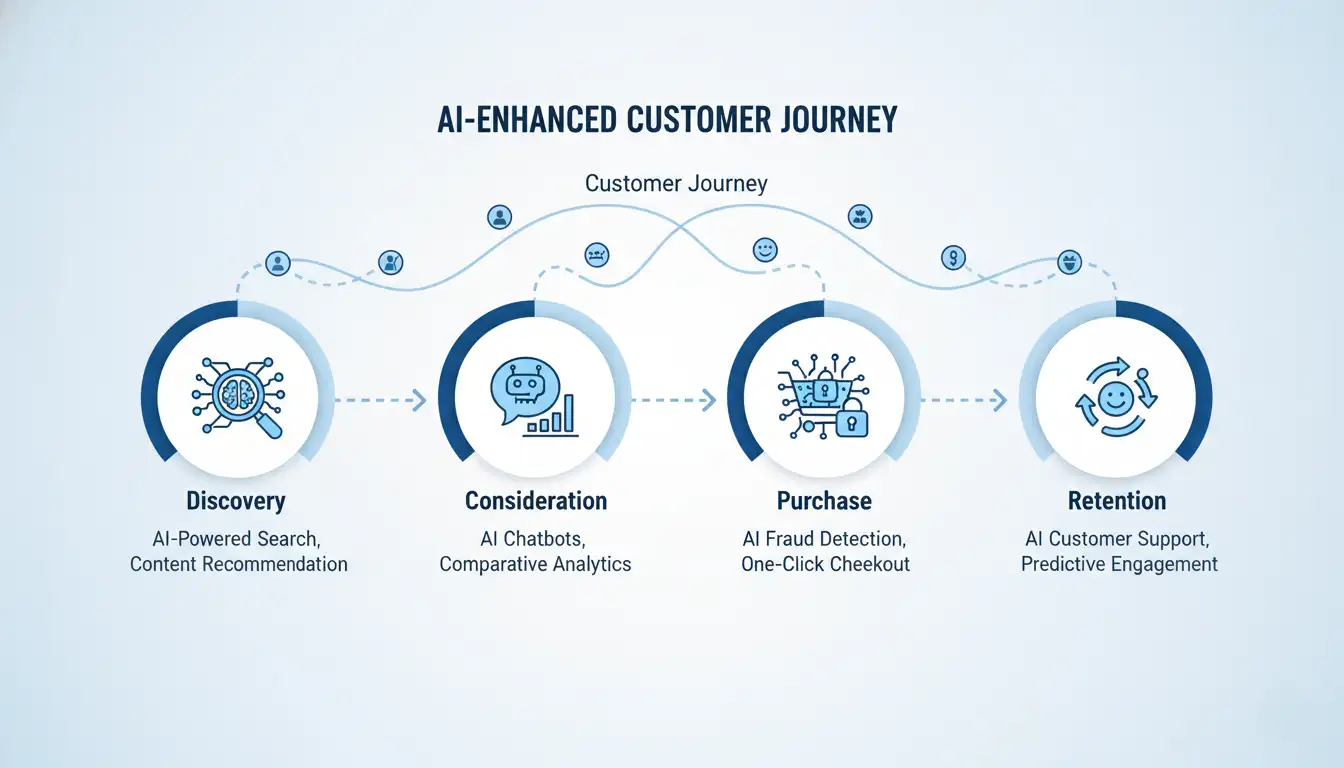
AI Marketing has pushed personalization far beyond name tags in emails to truly individualized journeys that respond to real-time behavior. Personalization engines read signals such as browsing paths, content engagement, purchase history, and device preferences to recommend the right products or articles at the right time. This appears as dynamic homepages, predictive search suggestions, and personalized bundles that adjust as users interact.
These experiences tend to boost metrics like revenue per visitor, average order value, and repeat purchase rates when done thoughtfully. Customers feel that brands understand their tastes and needs, which reduces friction in discovery and decision-making. This is especially valuable in choice-heavy categories—like tech, fashion, and subscriptions—where curation saves time and reduces decision fatigue.
Automation is the scaffolding that makes this level of personalization feasible at scale. Event-based workflows can trigger tailored responses to sign-ups, downloads, cart events, renewals, and churn signals. AI helps optimize variables like send time, channel choice, and subject lines to maximize engagement without constant manual tweaking. Combined with lifecycle scoring, this lets brands prioritize high-value contacts and the moments that matter most.
Chatbots and virtual assistants play a growing role in this ecosystem. They answer routine questions, guide users through product selection, and handle simple service tasks right inside websites, apps, and messaging platforms. Every interaction generates intent data that flows back into AI Marketing systems, improving segmentation, offers, and content recommendations. Over time, this loop makes experiences smarter and more aligned with user expectations.
From the customer’s perspective, the best AI-powered experiences feel seamless and supportive, not robotic. A visitor might discover relevant content, receive a contextually aware offer, and get instant help via chat, all without thinking about the underlying AI. The challenge for brands is balancing relevance with respect—avoiding over-personalization that feels invasive or reveals too much inferred knowledge. Companies that treat AI as a way to add clarity, convenience, and calm to customer journeys are more likely to build trust and long-term loyalty.

Ethics, Privacy, and Trust in AI Marketing
As AI Marketing grows more powerful, ethics and privacy have become central strategic concerns. Regulations and platform policies are tightening around cookies, identifiers, and data sharing, reshaping how tracking works across the open web and major platforms. Marketers must adapt by designing AI workflows that respect consent and minimize unnecessary data collection.
Privacy-by-design principles are emerging as a standard. This approach builds consent mechanisms, data minimization, secure storage, and clear retention policies into every AI in digital marketing initiative. Brands explain in straightforward language what information they collect, why they collect it, and what value customers receive in return. This transparency reduces confusion and helps people feel more comfortable with personalization and automation.
Bias and fairness are equally important. Algorithms trained on unrepresentative historical data can unintentionally favor or exclude certain groups, affecting who sees which offers, prices, or opportunities. To mitigate this, organizations are adopting fairness audits, stress-testing models across demographic slices, and bringing diverse voices into model design. Some also rely on external frameworks or advisory councils to review sensitive use cases.
Trust ultimately depends on aligning AI-driven actions with brand promises and user expectations. A company that claims to be customer-centric must ensure its AI systems do not overwhelm people with excessive communications or use manipulative tactics to drive short-term gains. Practical steps include strict frequency caps, intuitive unsubscribe flows, and easy access to privacy and preference controls. Measuring complaints, opt-outs, and satisfaction alongside revenue helps keep incentives balanced.
When ethics, privacy, and accountability are prioritized, AI Marketing becomes a long-term asset rather than a reputational risk. Users are more willing to share data when they see tangible benefits and feel confident it is handled responsibly. Brands that consistently demonstrate respect for user autonomy tend to enjoy stronger loyalty, better word of mouth, and more resilience when regulations or platforms change.

Future Outlook: The Next Era of AI Marketing Innovation
The next era of AI Marketing will see intelligent agents embedded across nearly every part of the marketing value chain. Instead of juggling disconnected tools for research, planning, creative, and optimization, marketers will interact with AI co-pilots that span these stages end to end. These assistants will answer natural-language questions, surface insights, and generate execution-ready assets from high-level briefs.
Marketers will be able to ask questions like “Which audience should we prioritize this quarter?” or “What creative angles are underused but promising?” and receive data-backed suggestions in seconds. AI co-pilots can also propose channel mixes, budget allocations, and forecast scenarios, updating recommendations as fresh performance data arrives. This continuous loop compresses planning cycles and encourages more agile experimentation.
Generative AI for ad retargeting will expand into broader generative experiences. Personalized videos, interactive quizzes, and adaptive landing pages will change in real time based on each viewer’s context, behavior, and preferences. As third-party cookies fade, privacy-centric approaches such as contextual targeting, server-side tracking, and federated learning will allow AI in digital marketing to remain effective without invasive tracking.
First-party data and value-based relationships will sit at the core of this ecosystem. Brands will lean more on consent-based information from loyalty programs, memberships, and communities to power their AI models. In return, customers will expect benefits like exclusive content, better recommendations, and more relevant rewards. This mutual value exchange will separate brands that use AI to deepen relationships from those that see it only as an efficiency lever.
For creators, startups, and mid-sized brands, this future is a levelling force. High-quality AI Marketing capabilities—once reserved for enterprises—are now available through intuitive SaaS tools and built-in features in ad and commerce platforms. Success will depend less on sheer budget and more on combining sharp positioning, authentic storytelling, and responsible AI usage. Brands that treat AI as a collaborative partner augmenting human creativity, not replacing it, will be best placed to build sustainable, meaningful connections in the years ahead.

Final Thoughts
AI Marketing has become a central force in reshaping how brands attract, convert, and retain customers, blending data-driven intelligence with human creativity and empathy. It is no longer just a set of tools bolted onto existing workflows, but a strategic foundation guiding how businesses choose audiences, craft messages, design journeys, and measure impact across every digital touchpoint. In this landscape, the winners are not simply those who collect the most data, but those who use AI to understand people more deeply and serve them more thoughtfully.
When AI in digital marketing is implemented with strong ethics, privacy awareness, and a long-term relationship mindset, it unlocks value for both businesses and customers. Capabilities like predictive analytics, real-time personalization, and generative AI for ad retargeting can reduce friction, surface relevant options faster, and provide support at the exact moment someone needs it. At the same time, privacy-by-design practices, transparent data policies, and fairness audits protect users from overreach and bias, turning AI from a perceived threat into a trusted ally.
The most forward-thinking organizations treat AI Marketing as a collaborative layer that amplifies human strengths rather than competing with them. Strategists gain clearer insight into audience motivations, creators earn more time for big ideas thanks to automation of repetitive tasks, and analysts can focus on high-value questions instead of manual reporting. This human-plus-AI model elevates the entire marketing function, encouraging experimentation, rapid learning, and cross-functional collaboration around shared data and goals.
Looking ahead, intelligent assistants and co-pilot experiences will make advanced AI Marketing capabilities accessible to teams of all sizes and skill levels. Marketers will increasingly brief AI agents in natural language, compare scenarios on the fly, and iterate on creative concepts in real time, shrinking feedback loops from weeks to hours. As generative AI for ad retargeting evolves into richer interactive formats and cookieless targeting matures, brands that invest in first-party data, consent-based relationships, and clear value exchanges will be best positioned to thrive.
Ultimately, the future of AI Marketing will be defined by how responsibly and imaginatively it is used. Brands that anchor their AI strategies in transparency, user control, and authentic storytelling will build durable trust and loyalty, even as algorithms and platforms change. By treating AI as a long-term partner in creating meaningful, human-centered experiences—rather than a shortcut for quick wins—marketers can unlock sustainable growth, stronger communities, and more inclusive digital ecosystems—follow AI Tech Unboxed for more.
Frequently Asked Questions (FAQs)
Q1: What exactly is AI Marketing?
AI Marketing is the use of artificial intelligence tools—such as machine learning, predictive analytics, and generative models—to analyze data, personalize experiences, automate workflows, and optimize campaigns across search, social, email, and display channels.
Q2: How is AI in digital marketing used by small businesses?
Small businesses use AI in digital marketing for content optimization, automated email journeys, smart segmentation, chatbots, and simplified ad management, helping them save time, reduce waste, and compete with larger brands on precision and personalization.
Q3: What is generative AI for ad retargeting?
Generative AI for ad retargeting uses advanced models to automatically create or adapt ad creatives—copy, visuals, and offers—based on each user’s behavior and funnel stage, continuously testing variations to improve relevance and performance.
Q4: What are the main benefits of AI Marketing?
Key benefits include richer audience insights, more accurate targeting, stronger personalization, higher campaign efficiency, faster content production, and improved ROI through data-driven and automated decision-making.
Q5: What risks or challenges come with AI Marketing?
Challenges include privacy and regulatory constraints, potential algorithmic bias, over-reliance on automation, integration complexity, and the need for clear governance to keep AI-powered tactics transparent, ethical, and aligned with brand values.