AI for Smartphone Battery Life: Practical Tips for 2026
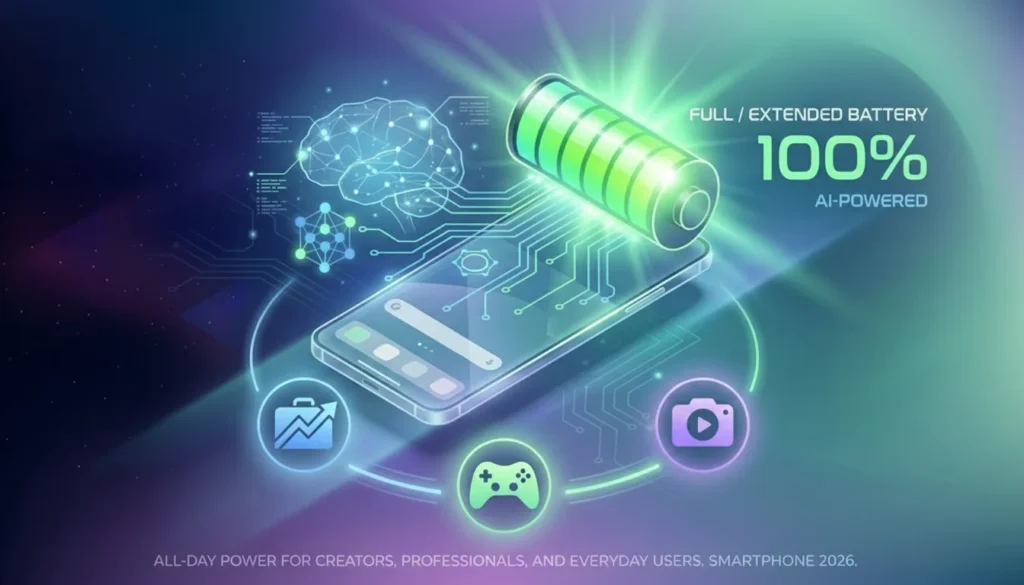
AI for smartphone battery life has become one of the most important upgrades in 2026 smartphones, turning devices into genuinely all-day companions instead of battery-anxiety machines. AI battery optimization now works quietly in the background, learning how, when, and where each person uses their phone, then shaping power delivery so you get maximum endurance without feeling slowed down or restricted. For creators, professionals, and everyday users, this means more freedom to work, play, and create content without constantly hunting for a charger.
Why Your Phone Dies Fast: The AI Battery Revolution Explained (2026)
AI battery optimization uses machine learning to continuously analyze usage patterns, charging habits, and environmental conditions to manage power intelligently instead of simply reacting when the battery is low. From the first days of setup, your phone begins tracking which apps you open most, how long your screen stays on, when you typically charge, and how often you move between Wi‑Fi and mobile data, then builds a personalized optimization profile. For example, if mornings are packed with browsing, email, and planning, and evenings are reserved for streaming or gaming, the system quietly preserves enough power for those high-demand windows instead of wasting it on low-priority background tasks earlier in the day.
This behavior is particularly useful in warm climates, where heat accelerates battery drain and degradation. AI for smartphone battery life factors in temperature and device load, adjusting CPU and GPU performance curves to keep the phone cool while still feeling responsive. On 2026 flagships, AI battery optimization in 2026 phones works hand-in-hand with new battery chemistries and dedicated neural engines that run power models locally, so decisions happen in milliseconds without sending data to the cloud. Users often see 25–35% more usable screen-on time compared with older devices or basic power-saving modes, turning intensive days into comfortable all-day sessions.
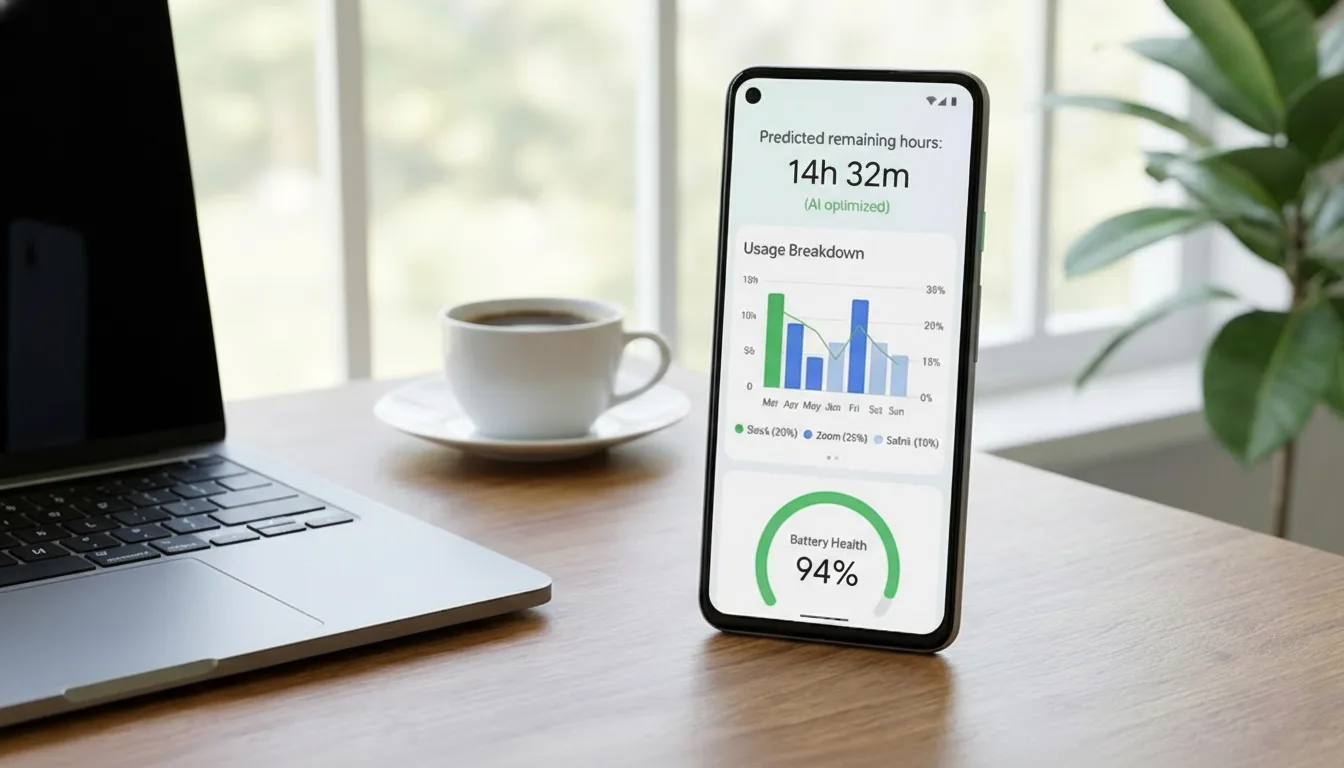
Battery health is also part of the equation. AI systems monitor charge levels, charging speed, and temperature during top-ups to avoid conditions that damage cells over time. Instead of racing to 100% and sitting there for hours, adaptive charging might hold at 80–90% until just before you wake or leave home, then finish charging right on time. Visual dashboards show estimated remaining time based on your habits, highlight the most power-hungry apps, and recommend simple lifestyle tweaks that extend life even further. As manufacturers roll out over-the-air updates, models are refined using anonymized fleet data, so your battery optimization continues to improve throughout the phone’s lifespan.
| AI Battery Optimization Component | Role | Key Advantage |
|---|---|---|
| Usage Profiling | Learns daily app and screen habits | 25-35% more screen time |
| Predictive Forecasting | Anticipates power needs by the hour | Fewer surprise low-battery events |
| Thermal Adaptation | Adjusts for heat and workload | Cooler, more stable performance |
| Health Analytics | Tracks and protects battery state | Longer overall battery lifespan |
Your Phone Knows You Better Than You Know Yourself: Here’s How
AI battery optimization starts by quietly observing how you use your phone rather than asking you to choose rigid modes or profiles. During the first few days, it collects basic information: which apps you launch, how long sessions last, when you typically plug in to charge, and whether you spend more time on Wi‑Fi or mobile networks. After about a week, the system begins to recognize patterns, like heavy evening streaming, morning navigation during commutes, or regular content editing blocks in the afternoon, and it tailors power allocation around those peaks.
All of this learning happens on-device using efficient neural networks, preserving privacy while enabling real-time response. AI for smartphone battery life can, for example, learn that you almost never open certain background apps directly, so it aggressively limits their activity until you actually need them. It can also recognize that when you’re using navigation, messaging, and music simultaneously, those apps must stay responsive even if it means pausing other background sync tasks temporarily. AI battery optimization in 2026 phones goes further with multimodal learning—combining accelerometer, location, and light sensor data—so the system knows when you’re walking, commuting, or resting and can adjust display refresh rates and connectivity behavior accordingly.
Over time, this personalization deepens. The system adapts when you install new apps, change jobs, travel more frequently, or shift to remote work. During idle charging at night, models are fine-tuned to reflect the latest usage, so each day’s behavior informs the next day’s optimizations. Multi-user or family devices benefit from profile-based learning, where each person’s patterns are treated separately to avoid conflicts—one user’s gaming no longer drains the battery reserved for another user’s calls and chats. The end result is a phone that feels like it understands your routine, staying full of energy when you need it most and saving power whenever possible without constant manual intervention.
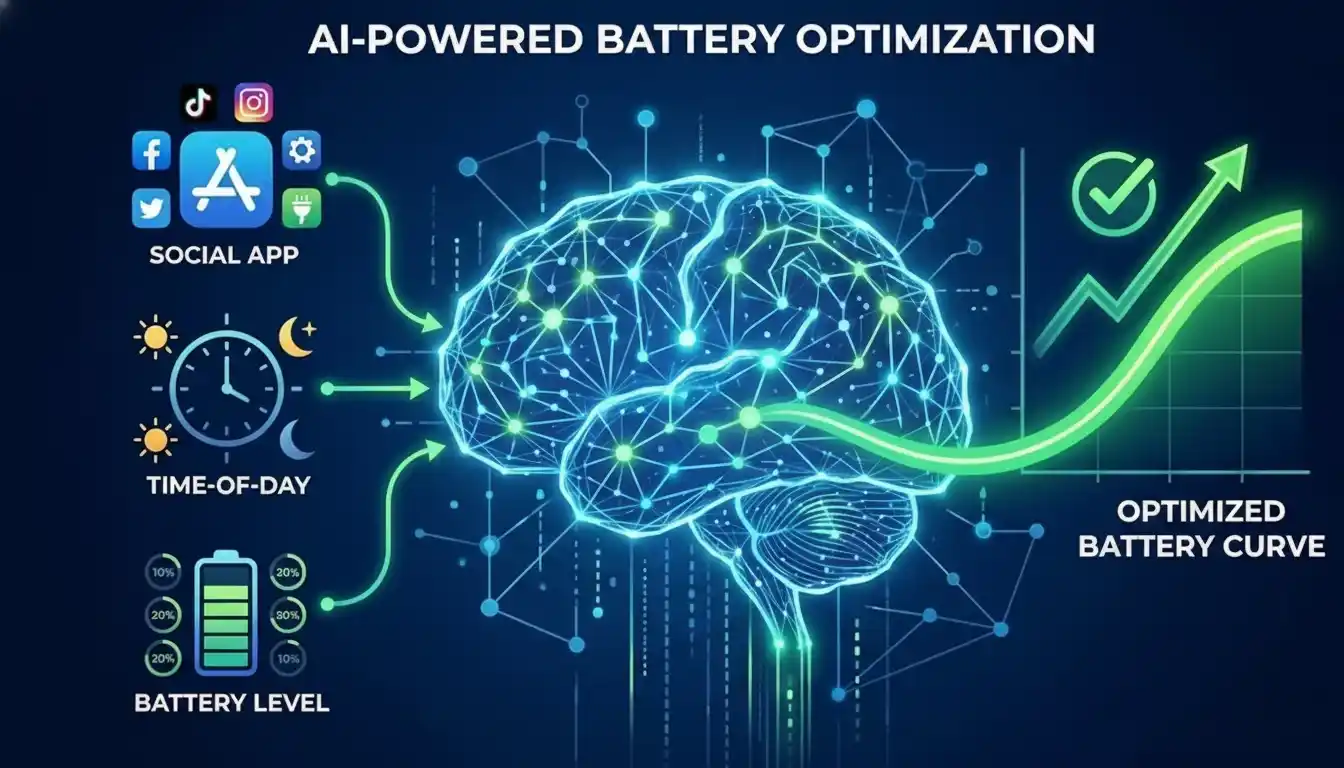
(Image suggestion: Visual of a neural network map with icons for apps, time-of-day, and battery level converging into an optimized battery curve. Alt text: How AI battery optimization learns user habits to extend smartphone battery life.)
| Learning Stage | What AI Focuses On | Practical Benefit |
|---|---|---|
| Early Adaptation | App usage and time-of-day patterns | Instant 15-20% efficiency gain |
| Pattern Deepening | Location, network, and routine behavior | Smarter prioritization of key tasks |
| Long-Term Personalization | Lifestyle changes and feedback loops | Stable 30%+ endurance improvement |
| Dynamic Retraining | New apps, travel, and OS updates | Consistent performance over time |
4 Smart Technologies That Keep Your Phone Charged All Day (Explained Simply)
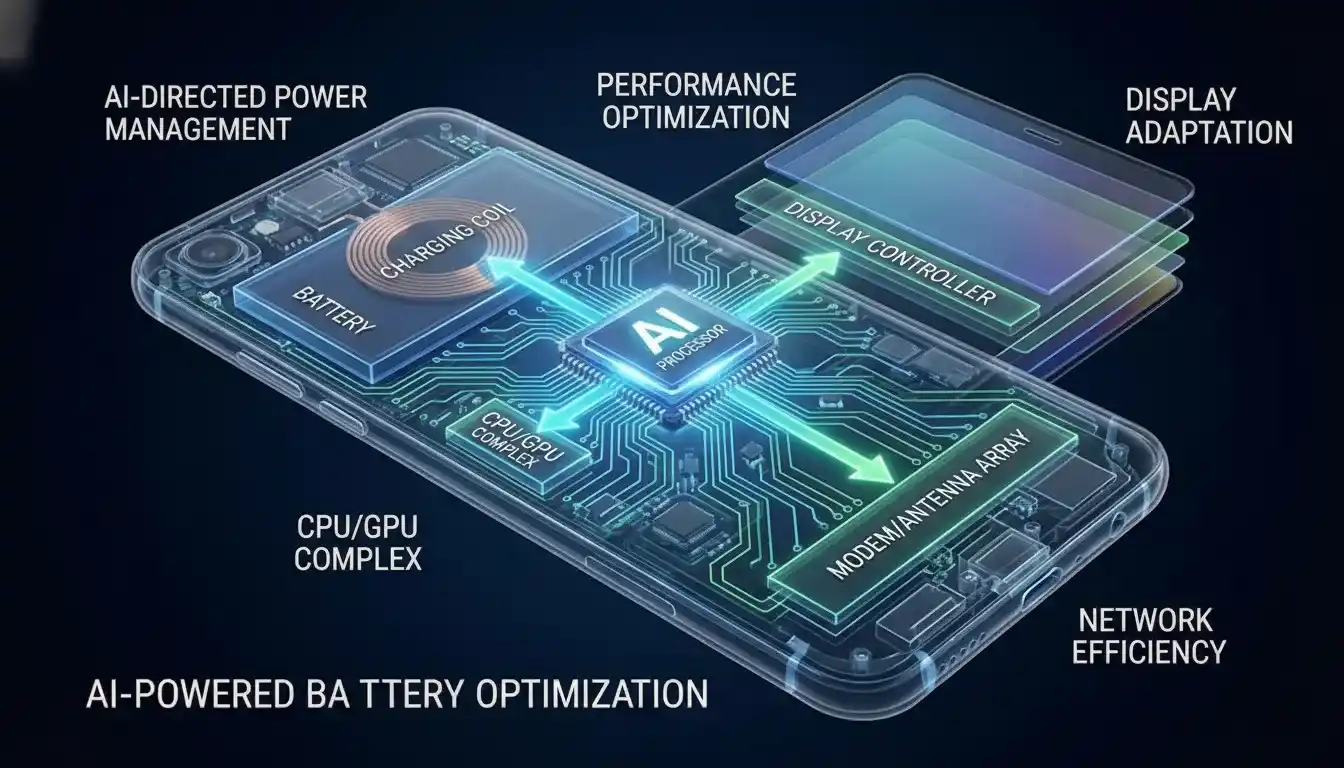
Behind the scenes, AI for smartphone battery life coordinates several technical mechanisms that all contribute to better endurance. One of the most important is smart charging, where the phone uses real-time voltage and temperature monitoring to control how fast and how far it charges at different times. Instead of blasting at full speed to 100% every time, AI may slow down around 80–90%, hold the charge, and only top up when it expects you will soon unplug, which reduces stress on the battery’s chemistry. Over months and years, this adaptive charging can significantly extend the number of useful charge cycles before noticeable degradation appears.
App and process management is another core piece. Rather than closing everything aggressively, AI battery optimization ranks processes based on importance and predicted need. Foreground tasks—like video editing, gaming, or video calls—receive top priority, ensuring there is no lag or stutter. Background tasks are split into essential (messaging, alarms) and non-essential (infrequent syncs, rarely used apps), and each category gets different limits on CPU time, network access, and wakeups. On 2026 devices, AI battery optimization in 2026 phones relies on dedicated neural processing units (NPUs) to make these decisions in real time without adding overhead, so the system remains efficient even while constantly adjusting.
Connectivity and display are two of the biggest power draws, and AI manages both intelligently. By predicting when you will have strong Wi‑Fi or when a 5G connection is unstable, AI can schedule large downloads or uploads for better conditions, reducing repeated radio wake-ups and saving energy. At the same time, the display’s brightness and refresh rate are adjusted based on content and context—static reading screens use less power than fast-paced gaming or social media feed scrolling. Thermal management ties it all together by watching for heat buildup and redistributing workload across different cores, keeping the device cooler and preventing performance throttling that can disrupt user experience.
| Mechanism | What It Does | Impact on Battery and Experience |
|---|---|---|
| Smart Adaptive Charging | Adjusts speed and timing of charging | Extends battery health and cycle life |
| App and Process Prioritization | Focuses power on important tasks | Less background drain, smoother use |
| Connectivity Optimization | Predicts and schedules radio usage | Cuts idle network power use significantly |
| Display and Thermal Control | Tunes brightness, refresh, and cores | Keeps device cool and responsive |
2026 Flagship Phones: How AI Delivers 3-4 Days of Battery (Real Results)
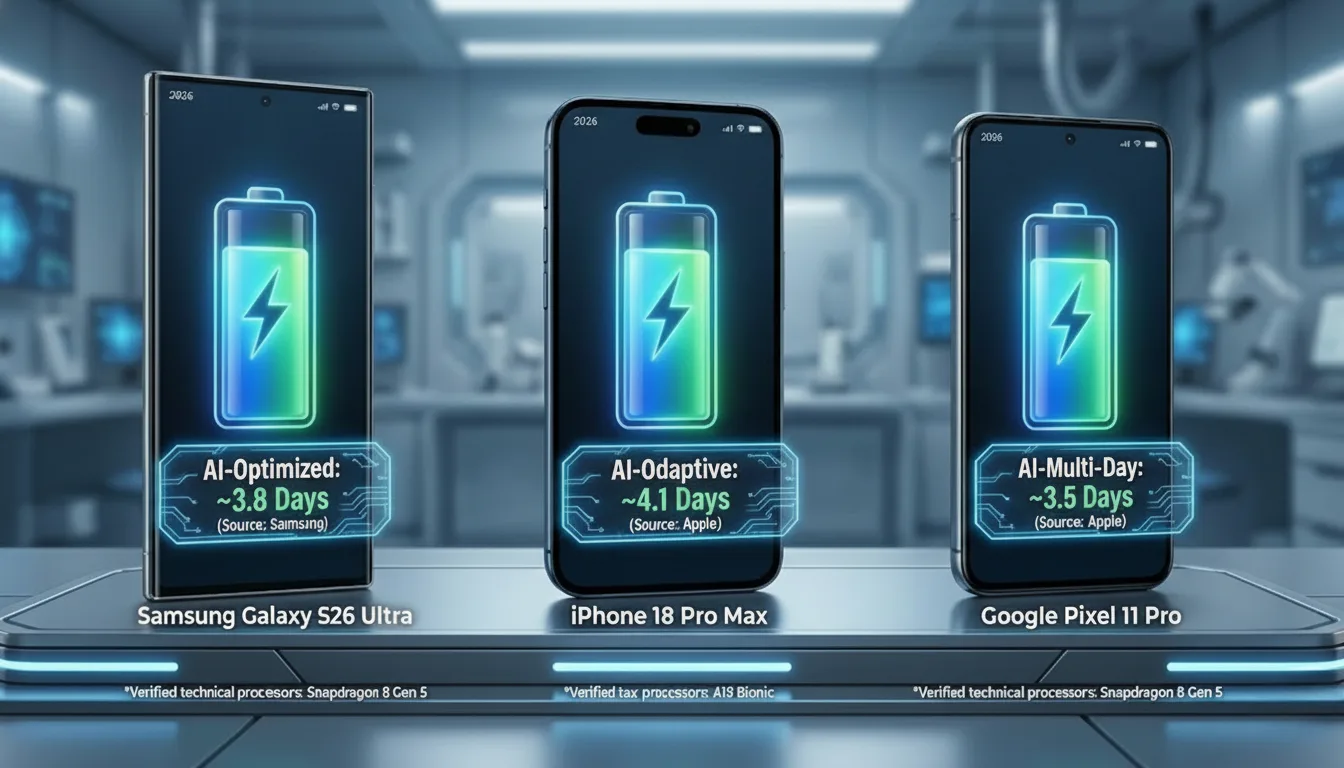
AI battery optimization in 2026 phones represents the most advanced generation yet, blending new battery technologies with sophisticated on-device AI models. Many high-end devices now pair improved lithium or early solid-state cells with controllers that can monitor each cell’s behavior individually, balancing charge and discharge across the pack. This cell-level awareness allows the AI to detect weak spots early and adjust usage or charging to protect overall health, instead of letting one failing cell reduce the entire battery’s capacity.
Generative and predictive models are increasingly used to simulate your upcoming day based on historical trends, calendar events, alarms, and even local weather. AI battery optimization in 2026 phones can, for example, detect that you have a long commute plus evening meetings and will likely be away from chargers, then automatically tighten background activity in the morning to reserve energy for later. Foldable phones benefit from dual-screen-aware AI, which learns when you typically open the large inner display and optimizes power budgets to support those sessions without unnecessary drain when only the cover screen is used.
These systems are also designed with climate and regional realities in mind. In hot, humid markets like India, where network quality and ambient temperature can vary greatly, AI for smartphone battery life factors in local conditions, limiting heavy workloads during extreme heat and favoring more efficient network states. Manufacturers validate these optimizations in lab testing and real user trials, often reporting 40% or more improvement in mixed-use endurance compared to previous years. Combined with regular software updates, 2026 phones stay efficient deeper into their life cycles, rather than feeling sluggish and short-lived after a year or two.
| 2026 Feature Set | AI Enhancement | User Benefit |
|---|---|---|
| Improved Cell Chemistry | Cell-aware AI balancing | More consistent capacity over time |
| Predictive Day Planning | Scenario-based power reservation | Battery lasts through key events |
| Foldable Optimization | Screen-specific power strategies | Efficient use across both displays |
| Climate-Aware Behavior | Local temperature and network tuning | Reliable performance in hot regions |

From Content Creators to Gamers: How AI Battery Life Changes Everything
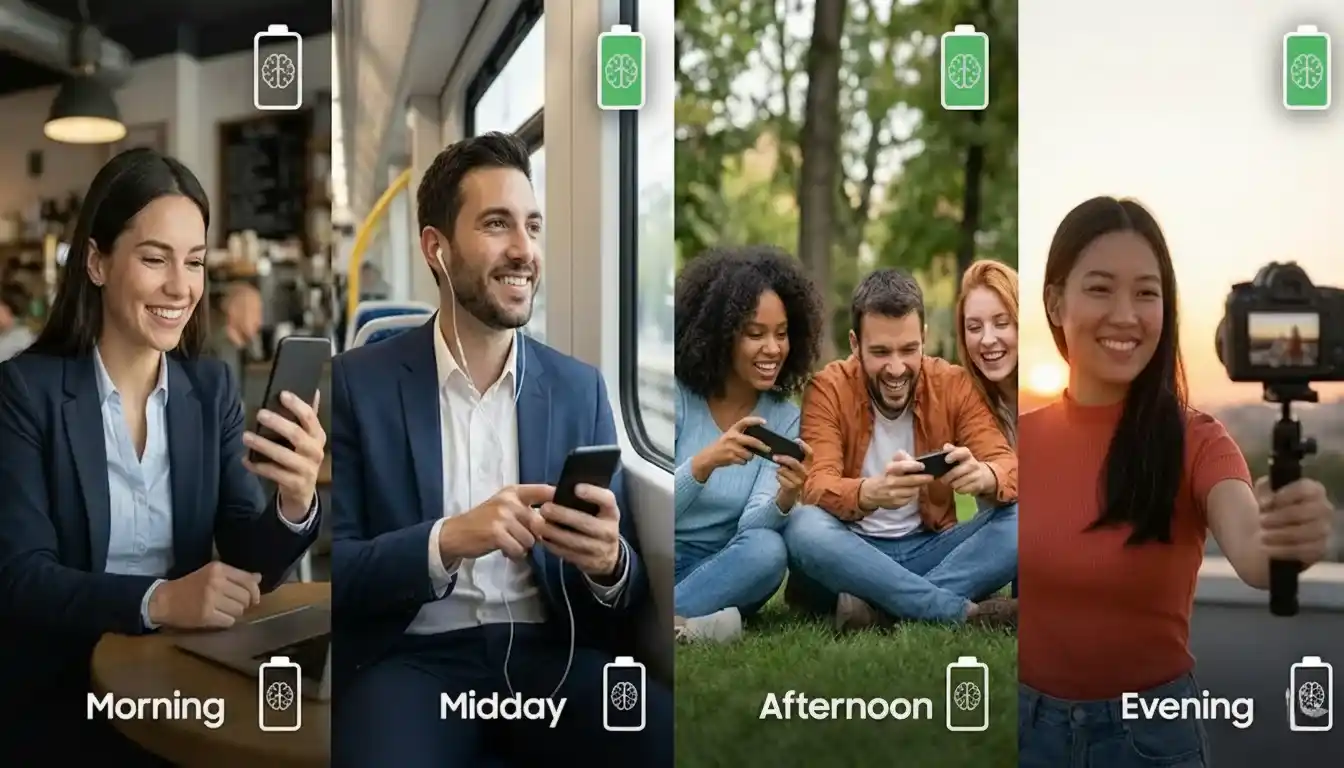
In everyday life, AI for smartphone battery life translates into tangible, easy-to-feel benefits. Content creators can plan, script, shoot, and edit without constantly watching the battery icon, because AI knows these tasks are essential and ensures the phone remains responsive while quietly reducing power costs elsewhere. Professionals can move from morning calls to midday emails to late-afternoon video conferences on a single charge, instead of scrambling for chargers between meetings. Gamers enjoy longer sessions with optimized thermal behavior, keeping frame rates steady without triggering aggressive throttling.
Families and shared-device households also gain from AI battery optimization, as per-user profiles help ensure fair and efficient usage. Children’s games or video streaming no longer consume all remaining power if AI has reserved some for a parent’s critical communications later in the day. For fitness-focused users, accurate tracking becomes more reliable, since AI avoids disabling health sensors prematurely, balancing their power needs with everything else. Over a device’s lifespan, these optimizations mean fewer full discharges and more gentle charging cycles, which preserve capacity and reduce the need for early battery replacements.
In countries with inconsistent power availability or heavy daily travel, such as India, the ability to confidently get through a long day is more than just a convenience. AI battery optimization can keep navigation, payments, and communication available even when power outlets are scarce, supporting both productivity and safety. Combined with environmental gains from longer-lasting devices and fewer discarded batteries, AI-powered endurance becomes both a personal and planetary win.
| Use Case | Old Experience (No AI) | New Experience with AI Battery Optimization |
|---|---|---|
| Content Creation Day | Mid-session charging interruptions | Full workflow on a single charge |
| Heavy Workday | Phone dies before end of day | Reliable power until after work |
| Gaming and Entertainment | Short sessions, heat and throttling | Longer, smoother playtime |
| Travel and Navigation | Anxiety about finding outlets | Confident day-long navigation |
The AI Magic Behind All-Day Battery: 5 Genius Algorithms Explained
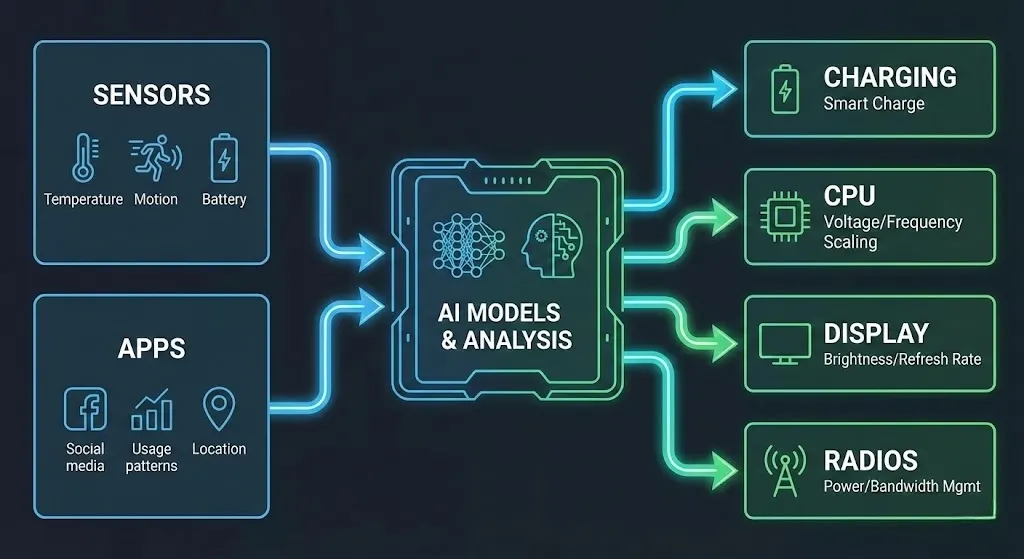
The intelligence behind AI battery optimization comes from several advanced techniques working together. Deep reinforcement learning allows systems to experiment with small adjustments—like slightly lowering refresh rate or delaying an app’s sync—then measure whether those changes saved power without hurting the experience. Over time, the model learns which combinations of adjustments yield the best trade-offs for different users and scenarios. Sensor fusion brings together data from accelerometers, gyroscopes, GPS, ambient light sensors, and thermometers to build a rich picture of what the phone is doing and what it might need next.
State-of-charge and health forecasting models use sophisticated electrochemical simulations to estimate not just how much battery is left, but how the battery will respond under different loads and temperatures. This allows AI for smartphone battery life to avoid risky states that could cause sudden drops or early shutdowns. Multi-objective optimization algorithms juggle competing goals—performance, temperature, responsiveness, and lifetime—so that solving one problem (like extending life) does not create another (like sluggish behavior). On modern silicon, especially in 2026 flagships, dedicated NPUs accelerate these calculations so they can run continuously without draining the battery they are trying to protect.
As more devices adopt these methods, federated and privacy-preserving learning approaches allow manufacturers to gather general trends (such as how a new OS build affects power consumption) while keeping user specifics on the device. This constant feedback loop enables steady improvements through software updates, making AI battery optimization something that gets better the longer you own the phone.
Old Battery Saver vs. AI Optimization: 3 Ways AI Wins (Data Proves It)
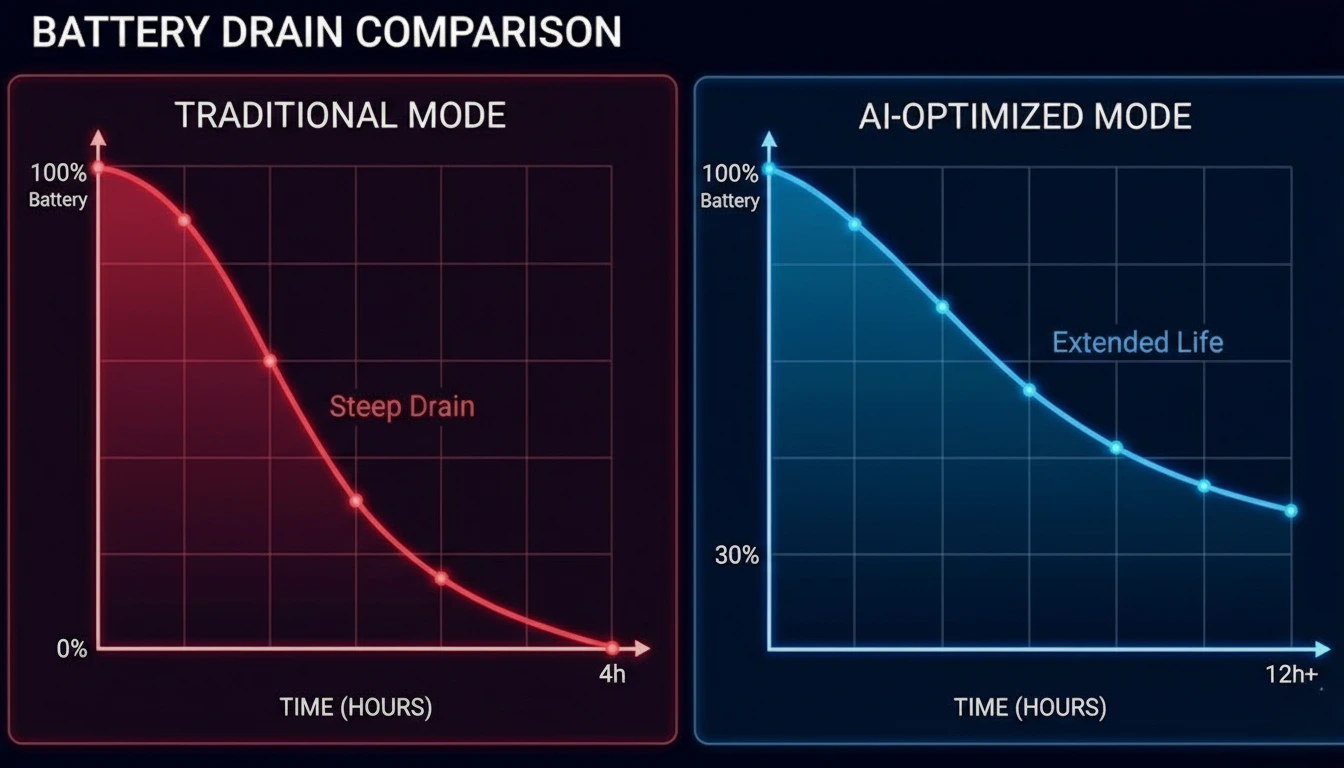
Traditional power-saving modes mainly rely on simple triggers and static rules: when battery is low, turn down brightness, reduce performance, and block background data. While this can extend runtime slightly, it often makes the device feel slower and less reliable, especially when important notifications are delayed or apps refresh constantly. By contrast, AI for smartphone battery life understands context and user habits, allowing it to make more precise adjustments that preserve performance where it matters and save power where it will not be noticed.
Older approaches also ignore long-term battery health, focusing solely on short-term survival. AI battery optimization cares about both: it stretches daily usage while also protecting the battery from harmful charging patterns and sustained high temperatures. Over months and years, this means less capacity loss and fewer reasons to replace or service the device. For users, the difference is obvious—a phone with AI optimization still feels dependable after a couple of years, whereas a similar phone without it may struggle to last through a day.
What’s Next? 4 Battery Game-Changers Coming to Your Phone by 2027
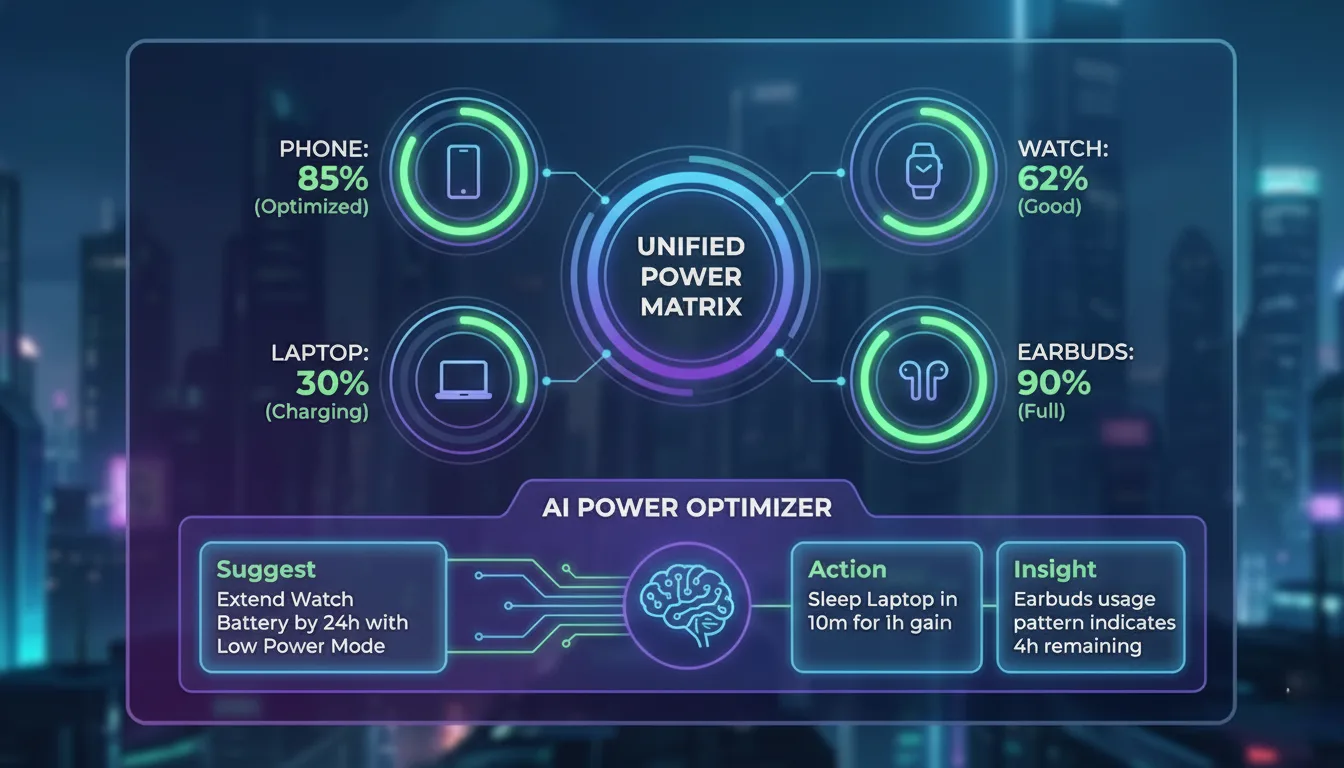
Looking forward, AI for smartphone battery life is set to become even more powerful and integrated. One major trend is the close coupling of AI with new battery materials—such as silicon-heavy anodes or early graphene-based cells—creating systems that understand the specific chemistry inside each pack and tune charging and discharging in real time. Instead of using a one-size-fits-all charging strategy, future phones will adapt their behavior as the battery ages, preserving capacity far longer than today. AI battery optimization will also increasingly span entire ecosystems, coordinating energy use between your phone, smartwatch, earbuds, laptop, and even smart home devices to decide which should handle which tasks without wasting power.
Another important direction is privacy-preserving collaborative learning. Using techniques like federated learning and differential privacy, manufacturers can learn from millions of phones how new apps or network technologies affect power consumption, then send back improved models without ever seeing individual user data. As networks evolve toward 6G, AI systems will become more adept at predicting signal quality and scheduling heavy data transfers for the most efficient times, reducing radio-related drain significantly. User interaction will also become more intuitive: instead of tweaking technical settings, people might simply ask, “Help my battery last until midnight,” and the AI will automatically adjust performance, connectivity, and background activity to meet that target.
These trends mean AI battery optimization in 2026 phones is just the beginning. Over the next few years, battery life will feel less like a hard limitation and more like something you can shape around your day with simple, human-friendly requests, while the AI handles all of the complex decisions underneath.
The Battery Revolution is Here: Time to Switch to AI-Powered Phones
AI for smartphone battery life has moved from being a background feature to a central reason why modern phones feel so capable and dependable in 2026. Instead of fighting your usage with blunt limits, AI battery optimization works with your habits—learning when you need performance, when you can save, and how to protect your battery’s health for the long run. Combined with new battery chemistries, smarter charging, and powerful on-device AI engines, it turns today’s smartphones into tools you can trust from early morning through late night, even on the busiest days.
For power users, content creators, gamers, and professionals, this means more time focusing on work and creativity and less time worrying about charging cables and battery percentages. For everyone else, it simply feels like the phone “just lasts,” even when life is unpredictable. As future trends push AI optimization deeper into ecosystems and closer to next-generation networks and materials, the gap between AI-optimized devices and basic, rule-based devices will only grow wider. Adopting AI for smartphone battery life today is not just about saving power—it is about choosing a smarter, more sustainable, and more user-friendly future for mobile technology.
Follow AI Tech Unboxed for more in-depth breakdowns of AI battery optimization, 2026 smartphone innovations, and practical strategies to get the most real-world value from your devices.
Frequently Asked Questions (FAQs)
1.What exactly is meant by AI for smartphone battery life?
AI for smartphone battery life refers to the use of machine learning and intelligent algorithms to monitor how you use your phone, predict upcoming power needs, and automatically adjust settings such as app activity, charging behavior, and connectivity to extend daily battery runtime and long-term health.
2.How does AI battery optimization work during a typical day?
AI battery optimization continuously tracks which apps you use, how long your screen is on, when you move between Wi‑Fi and mobile data, and how warm your phone gets, then uses that information to slow or pause less important background tasks, time heavy syncs better, and adapt performance so you have enough battery for the most important moments.
3.Why is AI battery optimization in 2026 phones better than earlier versions?
AI battery optimization in 2026 phones benefits from stronger on-device neural processors, improved battery chemistries, richer sensor data, and more mature models, enabling features like predictive day planning, cell-aware balancing, and climate-sensitive behavior that deliver significantly longer runtime and better battery health than older devices.
4.Does AI for smartphone battery life slow down the phone or make it laggy?
No—unlike basic battery saver modes that often reduce performance across the board, AI for smartphone battery life is designed to preserve full speed for the apps and tasks you actively use, while intelligently optimizing only non-essential processes and background activity, so most users experience smoother, not slower, performance.
5.How does AI battery optimization help with long-term battery health and sustainability?
AI battery optimization monitors charging patterns, temperature, and stress on the cells, then adjusts charging speeds, target levels, and workload distribution to reduce damage, which can extend the effective lifespan of the battery, reduce how often batteries or phones need to be replaced, and help cut down on electronic waste over time.