
7 Best AI Healthcare Tools in 2025 for Imaging, Diagnosis, and Workflow
In 2025, AI healthcare tools are no longer a “future trend” – they’re already integrated into scanners, dashboards, and doctors’ daily workflows. These AI healthcare tools are revolutionizing how clinicians spot critical findings on CT scans and reduce paperwork, allowing them to speed up diagnosis and improve patient care without replacing human expertise. This guide walks through seven standout AI healthcare tools and explains what they do, who they’re for, and how these AI healthcare tools fit into real hospital scenarios.
AI healthcare tools have shifted the landscape of modern medicine dramatically in recent years. These AI healthcare tools no longer feel experimental—they’re now embedded into daily clinical workflows at major hospitals worldwide. Modern AI healthcare tools help doctors make faster, smarter decisions while maintaining human judgment as the final authority in every clinical scenario.
The real competitive advantage of AI healthcare tools lies in their speed and consistency. These advanced AI healthcare tools process thousands of images and medical records in minutes, surfacing patterns humans might miss. By deploying AI healthcare tools strategically, clinicians achieve faster diagnosis, fewer treatment delays, and ultimately better outcomes for patients facing critical medical situations.
AI Healthcare Tools at a Glance
AI healthcare tools are making a substantial impact not only on clinical outcomes but also in operational and administrative domains. Hospitals now use AI to automate labor-intensive tasks such as medical coding, appointment scheduling, and preauthorization processes. As a result, medical staff can focus more on direct patient care while enjoying increased job satisfaction. Administrative efficiencies achieved with AI are also helping healthcare organizations reduce costs and allocate resources more strategically, driving better results for both patients and providers.
The convergence of modular AI platforms is becoming particularly significant. These advanced systems bring together various specialized AI applications—such as diagnostics, risk prediction, workflow management, and population health analytics—into a unified ecosystem. This approach unifies workflows across specialties, promotes seamless information exchange, and bridges gaps in patient care. It enables healthcare organizations to foster greater collaboration and innovation, fueling continued improvement in clinical outcomes across the care continuum.
- Focus: Practical AI healthcare tools for imaging, diagnosis, and workflow in 2025.
- Who it helps: Radiologists, emergency teams, oncologists, hospital admins, and healthtech founders.
- What you get: Simple summaries, best‑for tags, and example use cases you can relate to real clinical work.
The Rise and Scope of AI Healthcare Tools
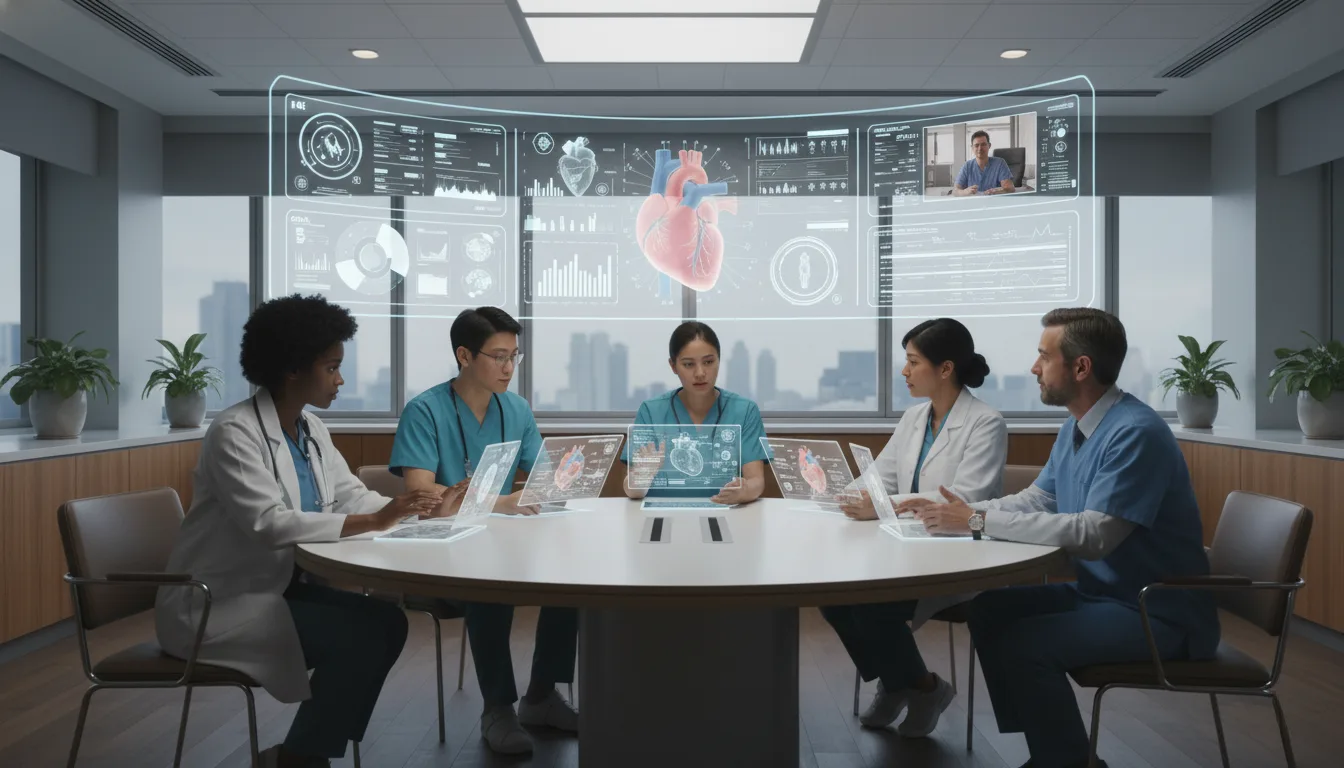
In just a few years, AI healthcare tools have evolved from experimental concepts into mainstream solutions, now at the heart of modern medicine. These advanced systems wield the power of machine learning, deep neural networks, and natural language processing to unlock insights previously hidden within complex clinical datasets. The scope of their applications has widened to encompass primary care, specialty medicine, population health, administrative automation, and even global health initiatives.
At the core of this transformation is AI’s extraordinary ability to process and interpret vast amounts of data swiftly and accurately. Medical images, electronic health records, genomic sequences, and patient-generated data are now routinely analyzed for early disease detection and risk assessment. AI healthcare tools outperform traditional approaches by recognizing subtle patterns, correlations, and markers that signal health issues long before symptoms emerge, often setting the stage for preventative, rather than reactive, medicine.
Clinicians are embracing AI to aid in quicker, more confident diagnoses, particularly in complex or ambiguous cases. These tools serve as intelligent assistants, cross-referencing a patient’s medical history, genetic risk, current symptoms, and literature evidence in real-time. This kind of cognitive support is invaluable in specialties like oncology, cardiology, and neurology, where early intervention can make the difference between life and death. AI also helps ensure that care standards are uniformly applied across different settings, reducing variability and error rates.
AI’s influence extends beyond direct clinical functions. Administrative functions—often a source of burnout among healthcare professionals—are being streamlined by AI-driven systems. From automatic appointment reminders to smart triage in emergency rooms and virtual health coaching through chatbots, these solutions free up precious human resources while increasing patient engagement. Virtual health assistants have become routine for answering patient queries, updating health records, and directing users to appropriate care pathways.
Most importantly, the rapid expansion of AI healthcare tools is resulting in a more interconnected, patient-centered ecosystem. AI connects providers, payers, researchers, and patients, enabling data sharing while maintaining privacy and security. The result is enhanced coordination, fewer duplications, minimized clinical errors, and more effective use of healthcare resources. Such a collaborative and human-centric model is helping redefine what quality care looks like in the digital age.
AI in Health Imaging: Transforming Diagnostics and Treatment
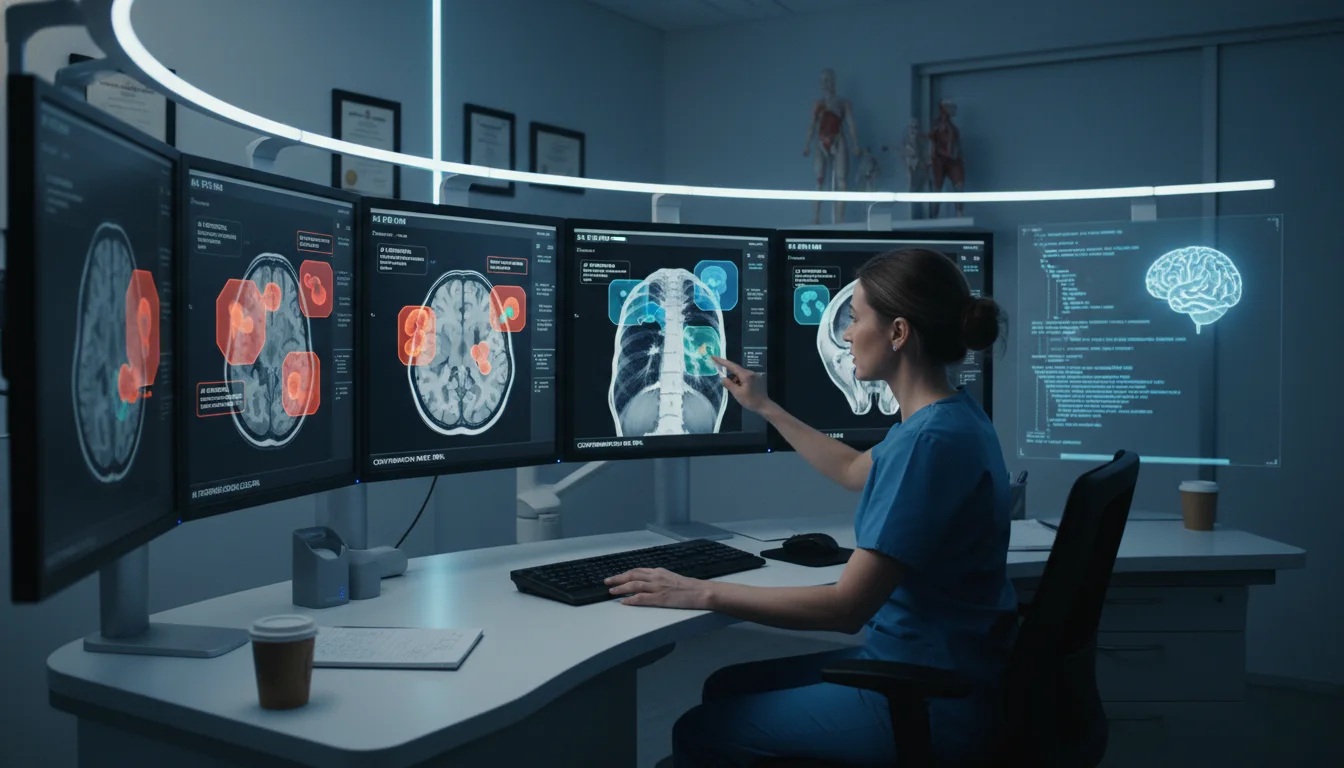
Among all areas impacted by AI, medical imaging stands out as one of the most profoundly transformed. AI in health imaging is now at the forefront of diagnostic medicine, combining deep learning algorithms with enormous repositories of clinical images to drive advances in detection, segmentation, and diagnosis. Hospitals and clinics worldwide leverage these solutions to interpret X-rays, CT scans, MRIs, and other images with unprecedented speed and precision.
The revolution starts with AI’s superior pattern recognition capabilities. Traditional imaging relies on the expertise and attention of radiologists, who may be tasked with reviewing hundreds of cases daily. Even the most skilled professionals can miss subtle clues, leading to delayed diagnoses. AI-powered imaging tools, trained on millions of annotated examples, act as a second set of eyes—highlighting minute anomalies, measuring lesions with pixel-level accuracy, and suggesting potential diagnoses for further review. They are particularly powerful in the early identification of diseases such as cancer, stroke, tuberculosis, and neurological disorders.
AI in health imaging goes beyond simple image analysis; it integrates imaging data with a patient’s health history, lab values, genomics, and even lifestyle factors to provide personalized diagnostic insights. This multifaceted approach supports precision diagnostics—so clinicians can tailor treatment plans for individuals rather than relying on general population statistics. For example, AI may predict the likelihood of heart attacks or cancer recurrence by synthesizing information across multiple domains, refining both risk assessment and ongoing monitoring.
These tools also streamline the radiology workflow. Automated image triage prioritizes urgent cases—such as strokes or life-threatening hemorrhages—alerting specialists immediately so that critical patients aren’t left waiting. AI-powered reporting automates routine findings, allowing radiologists to devote their time to complex or ambiguous cases. Furthermore, AI assists with longitudinal tracking, measuring subtle changes in patient scans over time to aid in disease monitoring and response evaluation.
The latest generation of AI imaging solutions even extends their reach to regions with limited access to specialists—offering cloud-based platforms and mobile diagnostics that deliver expert-level assessment locally and remotely. With ongoing advancements and broader adoption, AI in health imaging is poised to continually raise the bar for diagnostic accuracy, timeliness, and patient outcomes in 2025 and beyond.
Exploring the Best AI Tools for Medical Imaging in 2025
With the rise of AI in healthcare, the market is now crowded with innovative products designed for imaging applications. Healthcare organizations and radiology departments looking for the best AI tools for medical imaging in 2025 will encounter solutions ranging from specialized detection algorithms to comprehensive clinical workflow integrations. Selecting the top choices involves evaluating accuracy, workflow integration, regulatory approval, scalability, and ease of use.
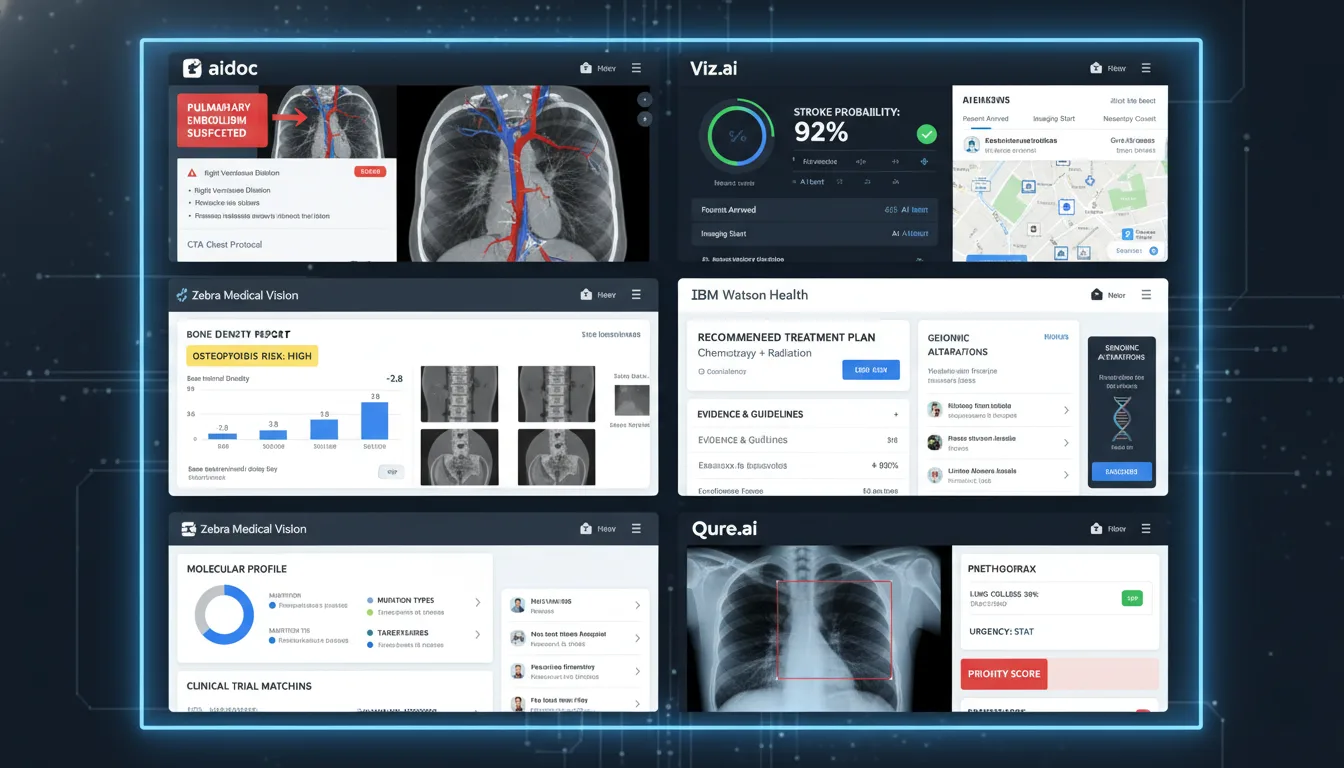
Aidoc plugs into a hospital’s imaging system and continuously scans CT, MRI, or X‑ray studies for life‑threatening findings such as brain bleeds or pulmonary embolism. When it spots something urgent, it flags the case and pushes it to the top of the radiologist’s worklist so the patient is seen sooner.
- Best for: Emergency departments and radiology teams with high scan volumes.
- Key strengths: Faster triage, fewer overlooked critical cases, and better prioritization when every minute matters.
- Simple scenario: A patient arrives with stroke-like symptoms; Aidoc highlights the suspected bleed within minutes, helping the team move quickly toward treatment decisions.
Viz.ai connects to stroke imaging in real time and looks for signs of large vessel occlusion as soon as a CT or CTA study is created. When it detects a suspected stroke, it notifies the on‑call team on their phones with images and key details so they can decide faster whether to move the patient to thrombectomy or other advanced treatment.
- Simple scenario: A regional hospital uploads a CT scan; Viz.ai flags a likely large vessel occlusion and instantly pings the stroke specialist at the main center, helping the team arrange transfer and intervention without waiting for multiple phone calls.
- Best for: Comprehensive stroke centers and hospitals using a hub‑and‑spoke model that need to cut treatment delays.
- Key strengths: Faster team activation, fewer communication gaps between sites, and better visibility on where each patient is in the stroke pathway.
Zebra Medical Vision offers a portfolio of algorithms that scan different imaging studies for a wide range of findings, from fractures and lung issues to cardiac and liver problems. Instead of focusing on one disease, it aims to give radiology departments broader “second eyes” across many body regions and modalities.
- Simple scenario: A large hospital system rolls out Zebra Medical Vision across its sites; the software surfaces overlooked vertebral fractures and early lung findings on routine scans, feeding back to clinicians so they can follow up before issues become critical.
- Best for: Hospital networks and imaging centers that want multi-condition AI support rather than a single-use tool.
- Key strengths: Wide coverage of pathologies, consistent detection rules, and a platform approach that can fit into existing PACS or workflow solutions.
IBM Watson Health now delivered through Merative-branded solutions, blends imaging analytics with clinical decision support to assist with complex cases such as oncology and chronic disease management. By combining patient records, guidelines, and AI models, these tools aim to surface relevant evidence, patterns, and next‑step suggestions at the point of care.
- Simple scenario: A multidisciplinary tumor board reviews a difficult cancer case; the platform organizes prior scans, pathology, and treatment options in one view, highlighting therapies and trials consistent with current guidelines.
- Best for: Large health systems that want more standardized, guideline-aligned decisions across many clinicians and sites.
- Key strengths: Integration with enterprise systems, emphasis on evidence-based suggestions, and support for both imaging and non‑imaging data.
Tempus focuses on cancer care, combining genomic tests, clinical records, and AI models to help doctors choose more targeted therapies and find clinical trials for their patients. Its platforms can highlight care gaps, suggest guideline-based next steps, and give researchers access to large, curated datasets for discovery.
- Simple scenario: An oncologist sees a patient with advanced lung or breast cancer; Tempus flags missing biomarker tests and recommends evidence-aligned options, while also showing open studies that might match the patient’s profile.
- Best for: Oncology centers and research-focused hospitals that want to personalize treatment and accelerate clinical research.
- Key strengths: Deep multimodal data (genomics plus clinical), tools that plug into the EHR, and insights that connect patients to appropriate therapies or trials.
Qure.ai builds imaging AI tools that read chest X‑rays and head CTs within seconds, helping clinicians pick up emergencies like pneumothorax or brain bleeds and chronic diseases such as tuberculosis. Its products are designed to work even in resource-constrained environments, making advanced triage and screening more widely available.
- Simple scenario: A busy emergency department sends chest X‑rays through Qure.ai; the system quickly flags suspected pneumothorax or severe pneumonia so those patients are reviewed first, while low‑risk films can wait.
- Best for: Public hospitals, TB and lung programs, tele‑radiology providers, and centers with limited radiologist capacity.
- Key strengths: Rapid turnaround, support for high‑volume chest imaging, and workflows tuned for emergency and screening scenarios.
These platforms represent the best AI tools for medical imaging, balancing technical excellence with real-world impact. Hospitals globally report significant reductions in diagnostic delays, improved workflow efficiency, and elevated patient care by deploying these solutions. As regulations continue to evolve and more data is validated, these tools will only grow in influence and utility.
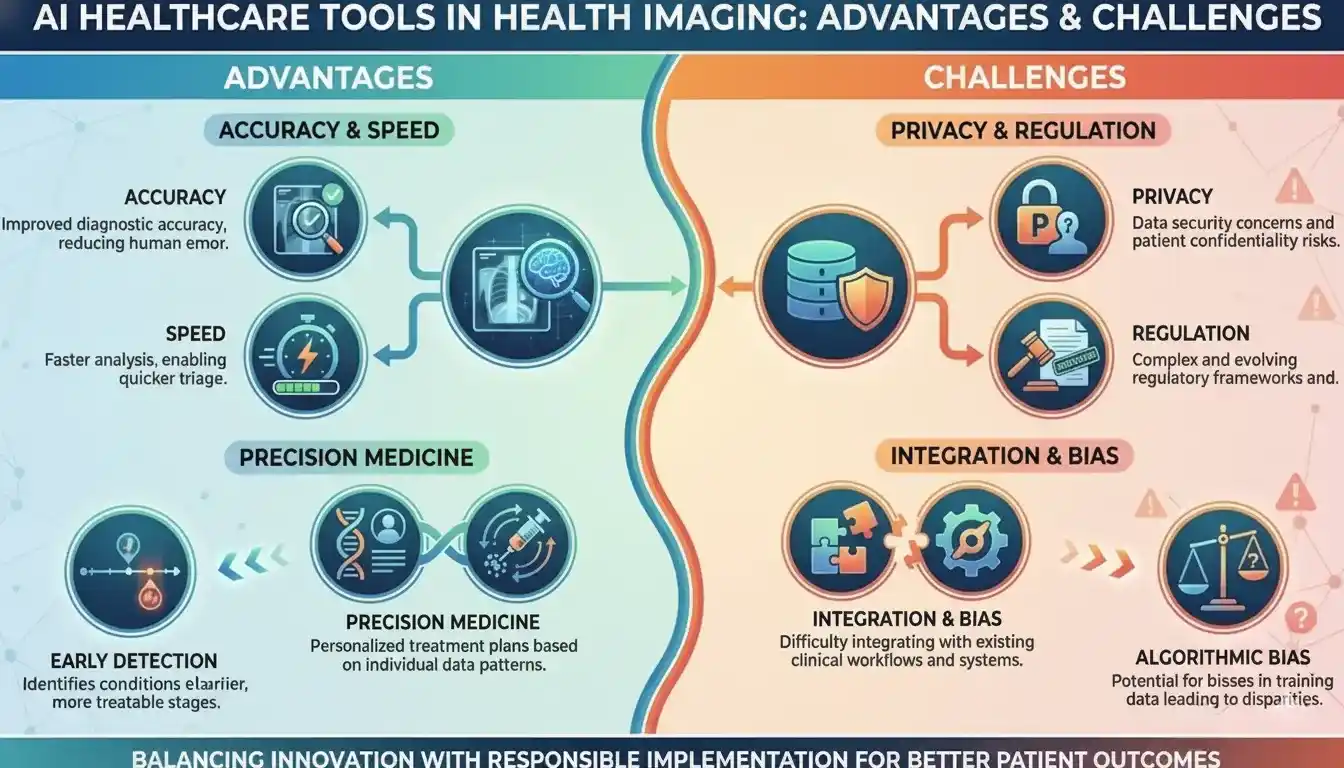
Benefits and Challenges of AI Healthcare Tools in Medical Imaging
AI healthcare tools have ushered in new levels of speed, precision, and effectiveness in medical imaging. One of their greatest benefits is significantly improved diagnostic accuracy. By acting as a tireless digital assistant, AI helps radiologists detect abnormalities—such as small tumors or subtle fractures—that might go unnoticed during manual review. Early identification allows for timely intervention and dramatically improved patient outcomes.
Efficiency is another major advantage. AI-driven automation shortens the time needed for evaluating and reporting on images, often reducing turnaround from hours to minutes. This is especially crucial in high-volume or emergency care settings, where quick decisions save lives. Automation of routine interpretations also mitigates the risk of fatigue-induced errors and frees radiologists to focus their expertise on the most complex and ambiguous cases.
Other benefits include enhanced precision medicine, thanks to AI’s ability to synthesize data from multiple sources—imaging, clinical history, genomics, and even lifestyle data—into a holistic view of patient health. This comprehensive perspective enables care teams to develop and monitor customized treatment plans, revolutionizing chronic disease management and cancer therapy monitoring. AI can also facilitate continuous disease tracking, with algorithms quantifying changes between serial scans and alerting clinicians to disease progression or treatment response.
However, these advantages come with significant challenges. Data privacy and security are key concerns, given the immense sensitivity of medical imaging data. Healthcare providers and AI developers must ensure that patient information is safeguarded against unauthorized access while still allowing for the large-scale data sharing necessary to improve models. Another hurdle is the need for high-quality annotated datasets for effective AI training and validation, which is often resource-intensive to produce.
Adoption barriers also stem from clinical and regulatory considerations. Clinicians must trust AI outputs—requiring transparency, explainability, and rigorous validation. Regulatory agencies require clear evidence of safety, efficacy, and lack of bias, especially when AI is used for primary diagnosis. Lastly, integrating new AI solutions into existing hospital IT infrastructure is often complex, requiring investment, change management, and long-term support strategies.
Despite these challenges, the steady stream of breakthroughs, supportive policy frameworks, and active dialogue among stakeholders is paving the way for broader AI adoption in medical imaging. The end result is better, more reliable, and more accessible diagnostic care for all patients.

Future Outlook: The Next Era of AI Healthcare Tools and Imaging Innovation
The future of AI healthcare tools, especially as they relate to health imaging, promises dramatic advances that will reshape clinical practice around the globe. AI models are becoming smarter, learning not just from static images but from a fusion of multi-modal data—combining imaging, pathology, genomics, patient-reported outcomes, and real-world evidence into a 360-degree view of patient health. This comprehensive insight will usher in a new era of predictive, preventive, and truly personalized medicine.
A key trend is the development of privacy-preserving and federated learning frameworks. These approaches allow AI models to be trained on decentralized data stored at different hospitals, ensuring patient privacy while leveraging the benefits of large and diverse training datasets. The result is more robust, unbiased AI tools for medical imaging that work equally well across different populations, healthcare settings, and geographies.
Portable AI-enabled imaging devices and point-of-care diagnostic systems are another game-changer. Equipped with built-in intelligence, these devices offer instant, expert-level analysis right at the patient’s bedside or in remote clinics. Such innovations are increasing access to specialist-grade care in rural and underserved communities, reducing global health disparities and improving emergency care in critical situations.
As the scope of AI expands, advanced visualization and augmented reality solutions are emerging to support surgeons and radiologists. Imagine real-time surgical navigation with live overlays of anatomical structures, or heads-up displays guiding delicate interventional procedures based on AI-assisted image analysis. These technologies promise to enhance clinician accuracy, boost confidence, and improve procedural safety.
While the pace of innovation is staggering, continued progress will depend on collaboration—among healthcare providers, technology companies, regulators, and, most importantly, patients and communities. Clear rules, shared best practices, and ongoing education will ensure that future generations of AI healthcare tools remain ethically aligned, explainable, and fully human-centric, magnifying their benefit across every aspect of medicine.
Final Thoughts
AI healthcare tools are at the center of a historic transformation in medicine. Nowhere is this more apparent than in health imaging, where AI is accelerating diagnostics, enhancing clinical workflows, and personalizing patient care. The best AI tools for medical imaging—purpose-built, validated, and seamlessly integrated-—help medical professionals make faster, more confident decisions and bring quality care to more people than ever before.
As these technologies continue to evolve, healthcare stands to benefit from even greater accuracy, efficiency, and equity. Both clinicians and patients must be active participants in this journey, championing innovation while keeping human values and safety at the core. With strong partnerships, ethical standards, and a shared vision, AI healthcare tools will continue to unlock new dimensions in healthcare quality and accessibility.
Stay connected with AI Tech Unboxed to explore the latest trends, real-world success stories, and expert reviews on AI in health imaging, and discover what lies ahead at the intersection of technology and care.
Frequently Asked Questions (FAQs)
Q1: What are AI healthcare tools?
AI healthcare tools are software, platforms, or systems driven by artificial intelligence that support and enhance various aspects of clinical decision-making, diagnostics, administrative processes, and personalized treatment across healthcare.
Q2: How is AI used in health imaging?
AI in health imaging processes and analyzes medical images—like X-rays, CT scans, and MRIs—to spot abnormalities quickly and accurately. For example, stroke detection tools analyze brain CTs to identify blood clots within seconds, while lung imaging AI flags suspicious nodules on chest X-rays that could indicate pneumonia or cancer.
Q3: What are some of the best AI tools for medical imaging?
Top platforms in 2025 include Aidoc, Viz.ai, Zebra Medical Vision, IBM Watson Health, Tempus, and Qure.ai, known for their diagnostic accuracy, integration capability, and positive impact on patient outcomes.
Q4: What benefits do AI healthcare tools offer?
AI tools increase diagnostic accuracy, speed up analysis, reduce clinician workload, facilitate precision medicine, and improve care coordination and overall patient experience.
Q5: What challenges exist in adopting AI healthcare tools?
Key barriers include data privacy and security concerns, the need for high-quality annotated training data, clinical trust and transparency requirements, and regulatory approval processes. Budget and IT integration work also present real challenges, especially for smaller hospitals trying to adopt new AI systems alongside their legacy infrastructure.