AI Native Smartphones 2026: India’s Next Big Upgrade Revolution
AI native smartphones 2026 are transforming how we interact with our devices, bringing powerful on-device AI capabilities directly to Indian consumers without constant cloud dependency. These on device AI phones prioritize privacy, speed, and context-aware intelligence, making them essential for creators, professionals, and everyday users in India’s diverse digital landscape. This comprehensive guide explores the best AI native smartphones 2026 India, their standout features, and why they’re set to dominate the market.
What Defines AI Native Smartphones 2026
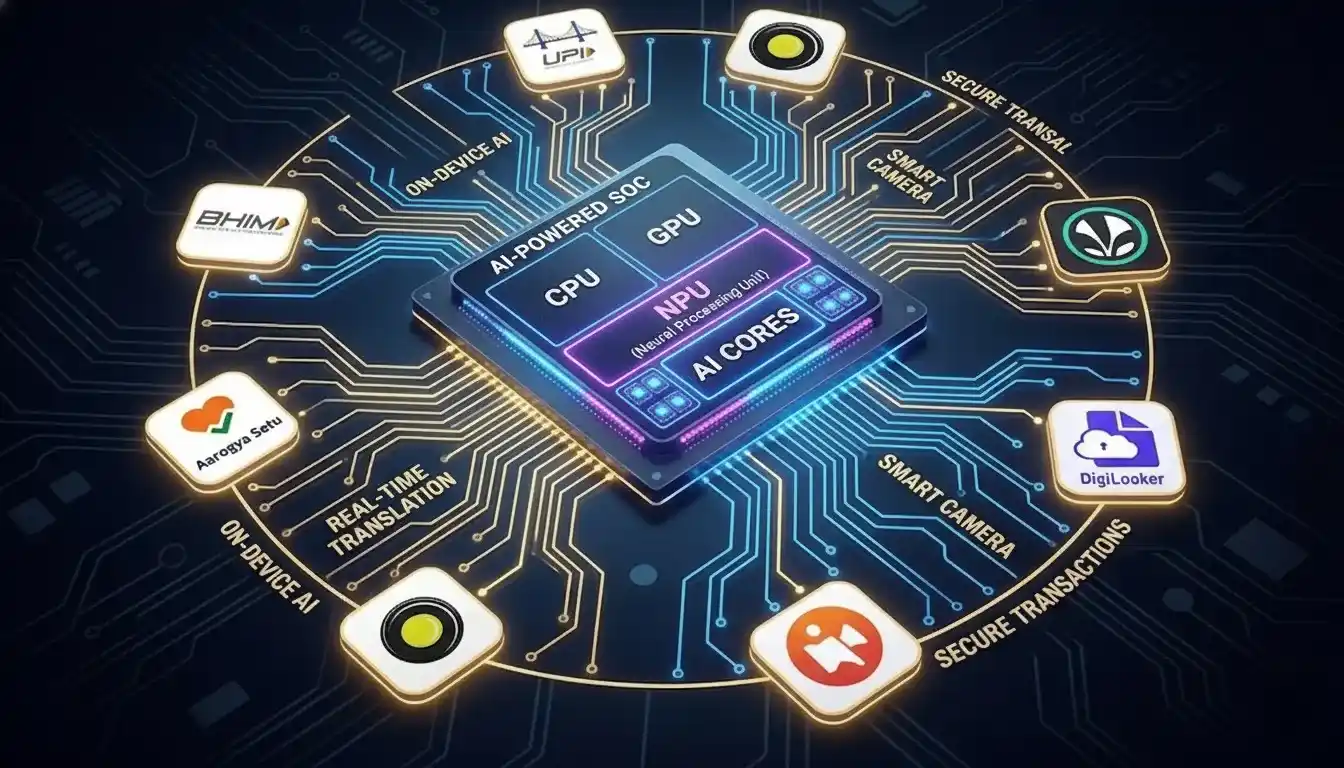
AI native smartphones 2026 represent a fundamental shift where artificial intelligence forms the core architecture rather than being an afterthought feature. Manufacturers now design chipsets, software stacks, and hardware around dedicated Neural Processing Units (NPUs) capable of running complex large language models (LLMs) locally. This enables seamless execution of tasks like real-time translation, photo generation, and predictive text without internet connectivity, which is crucial for India’s variable network conditions.
The distinction lies in integration depth—traditional smartphones offered basic AI like scene recognition, but AI native smartphones 2026 embed intelligence across the entire user experience. From adaptive user interfaces that learn your habits to proactive notifications that anticipate needs, every interaction feels intuitive and personalized. In India, where multilingual communication dominates, these devices excel at handling Hinglish inputs, regional dialects, and mixed-language content processing on-device, making them perfect for family chats, work groups, and social media content creation.
For tech-savvy Indian buyers seeking the best AI native smartphones 2026 India, this evolution means accessing premium AI features previously limited to cloud services. Enhanced privacy comes standard as personal data stays within the secure hardware enclave, addressing growing concerns over data sovereignty and compliance with India’s DPDP Act. Brands are competing fiercely with optimizations for local apps like UPI payments (recognizing transaction patterns), government portals (auto-filling forms), and regional streaming services (personalized content recommendations).
On device AI phones also promise better battery efficiency through intelligent power management that learns your daily patterns. AI algorithms dynamically allocate resources, prioritizing active tasks while idling unused components, extending daily usage without frequent charging—critical for students attending long college lectures or professionals working extended hours in tier-2 cities with limited charging infrastructure.
The ecosystem maturity accelerates adoption as developers optimize apps for on-device inference, creating richer experiences like offline video editing suites rivaling desktop software, AI-powered note-taking that structures thoughts automatically, and even local code debugging assistance for budding developers. This creates a virtuous cycle where more apps leverage AI native capabilities, making the phone ecosystem exponentially more powerful year over year.
Table: Evolution from Traditional to AI Native Smartphones
Why On Device AI Phones Dominate 2026
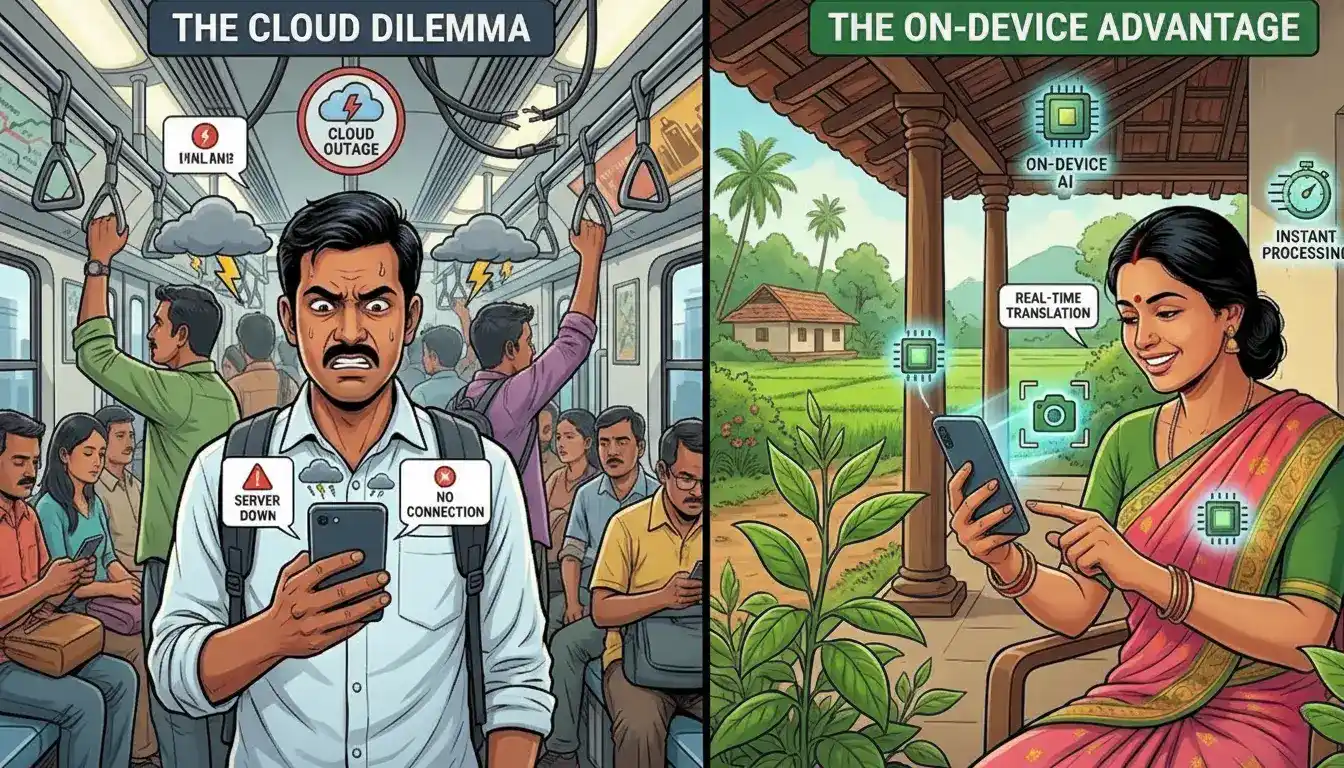
On device AI phones lead 2026 trends because they solve real-world problems like connectivity gaps, privacy risks, and performance bottlenecks that plague cloud-reliant systems. In India, where 60% of the population faces inconsistent 4G/5G coverage across metro commutes, rural travel, and data-saving modes, local processing ensures AI features remain functional 24/7—transforming phones into reliable companions rather than occasional smart devices.
Privacy-conscious users benefit immensely as sensitive operations like health tracking analysis (recognizing stress patterns from heart rate), financial document scanning (UPI transaction verification), and personal photo enhancements (family portrait restoration) never leave the device. Regulatory pressures around India’s DPDP Act and growing awareness of data breaches position AI native smartphones 2026 as compliant, future-proof choices that brands aggressively market as “your data stays yours.”
Performance leaps come from next-gen chipsets like Qualcomm’s Snapdragon 8 Elite series (45+ TOPS NPU) and MediaTek’s Dimensity 9400+, enabling sustained AI workloads without thermal throttling. Creators editing 4K Reels with generative effects, professionals running multi-app workflows across LinkedIn/Zoom/UPI, and gamers enjoying AI frame generation all experience flagship performance that previous generations couldn’t sustain beyond 10-15 minutes.
Cost efficiency emerges as another major driver—reduced cloud dependency lowers long-term mobile data expenses (crucial for Jio/Airtel prepaid users), while efficient hardware extends device lifespan through software promises of 7+ years of AI feature updates. Indian consumers, renowned for value-driven purchases, respond positively to this combination of upfront capability, extended relevance, and lower total ownership cost compared to constant cloud subscription models.
Market analysts predict on device AI phones capturing 70% of premium segment sales and 40% of midrange sales in India by Q3 2026, fueled by aggressive pricing from domestic champions like Nothing Phone (AI-first design philosophy) and international players tailoring features for local tastes—FM radio with AI station suggestions, IR blasters for AC control, and UPI deep-link automation.
Table: On Device AI Benefits for Indian Scenarios
Top AI Features Powering 2026 Smartphones
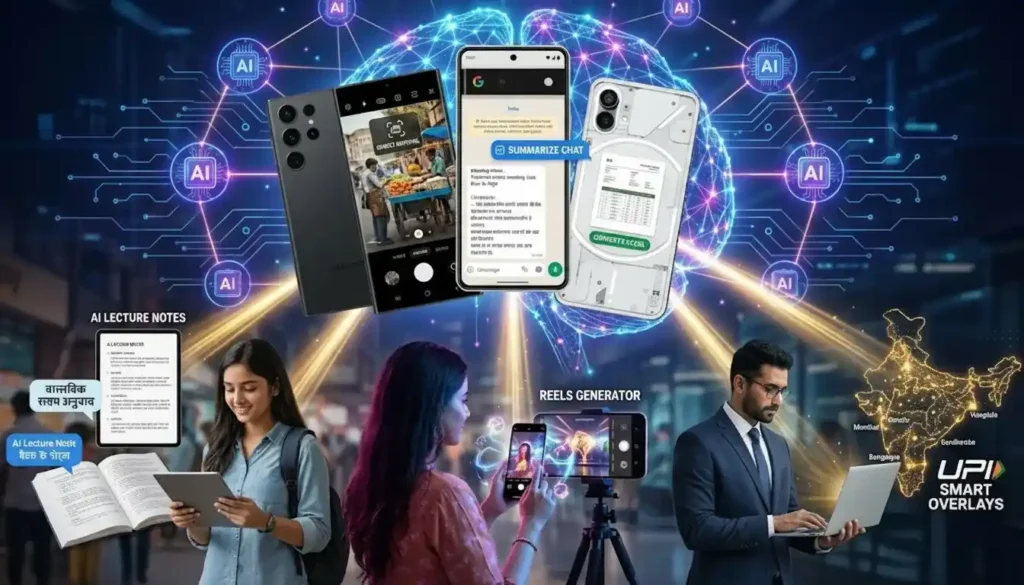
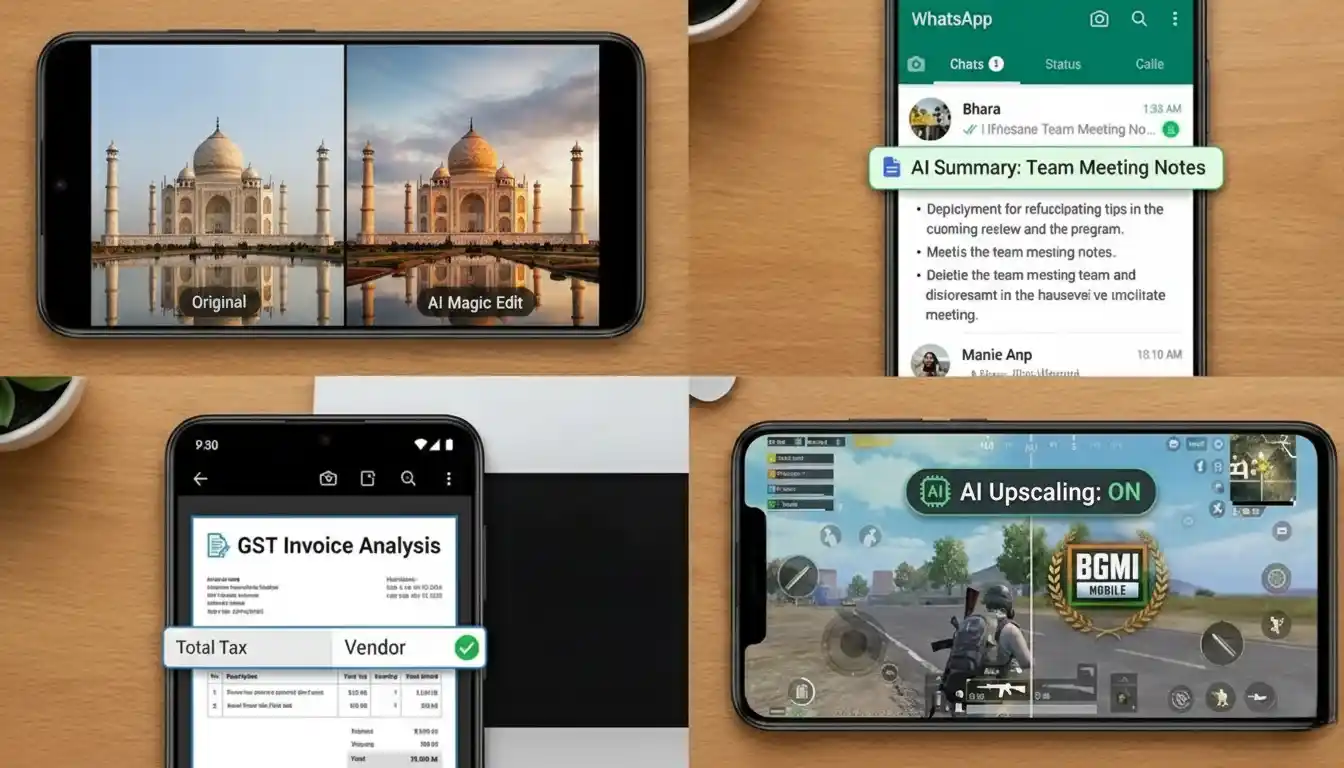
AI native smartphones 2026 showcase camera systems elevated by generative AI, enabling object removal (tourist from Taj Mahal shots), scene expansion (extending horizons), and studio-quality portraits through on-device diffusion models that rival professional Photoshop workflows. Indian creators particularly value real-time Hinglish captioning for Instagram Reels, automatic highlight extraction from family wedding videos, and AI b-roll generation—streamlining content pipelines from phone to viral post without desktop transfers.
Communication transforms with intelligent call screening that transcribes conversations live (even in noisy auto-rickshaw rides), extracts action items (“book doctor appointment”), and suggests follow-ups in your preferred tone across Hindi/English mix. WhatsApp integration allows thread summarization spanning hundreds of family group messages into digestible bullet points with deadlines, saving hours for group admins—a feature resonating strongly in India’s messaging-heavy culture where single threads often exceed 10,000 messages.
Productivity reaches laptop levels with on-device document analysis turning lengthy GST invoices or college PDFs into structured Excel sheets, presentation slides, or even audio summaries for commutes. Screen understanding AI watches your browsing patterns to automate repetitive form filling across banking sites (SBI/ICICI), travel bookings (IRCTC/RedBus), and job portals (Naukri), reducing 30-second tasks to single taps while learning your preferences over time.
Health and wellness features leverage on-device processing for nuanced insights—analyzing sleep patterns against local AQI/weather data (crucial during Delhi winters), suggesting hydration breaks during humid Mumbai summers, or detecting stress from typing patterns during exam season. Accessibility shines with real-time Indian Sign Language translation via front camera AI, audio descriptions for visually impaired users navigating Mumbai local train announcements, and dyslexia-friendly text reformatting.
Gaming benefits from AI upscaling rendering AAA titles like BGMI at 120fps on midrange hardware, plus adaptive difficulty that matches your skill progression—perfect for India’s booming mobile esports scene where PUBG tournaments draw lakhs of participants. AI coaches analyze gameplay in real-time, suggesting positioning improvements without cloud dependency.
Table: Core AI Feature Categories in 2026
Best AI Native Smartphones 2026 India Picks
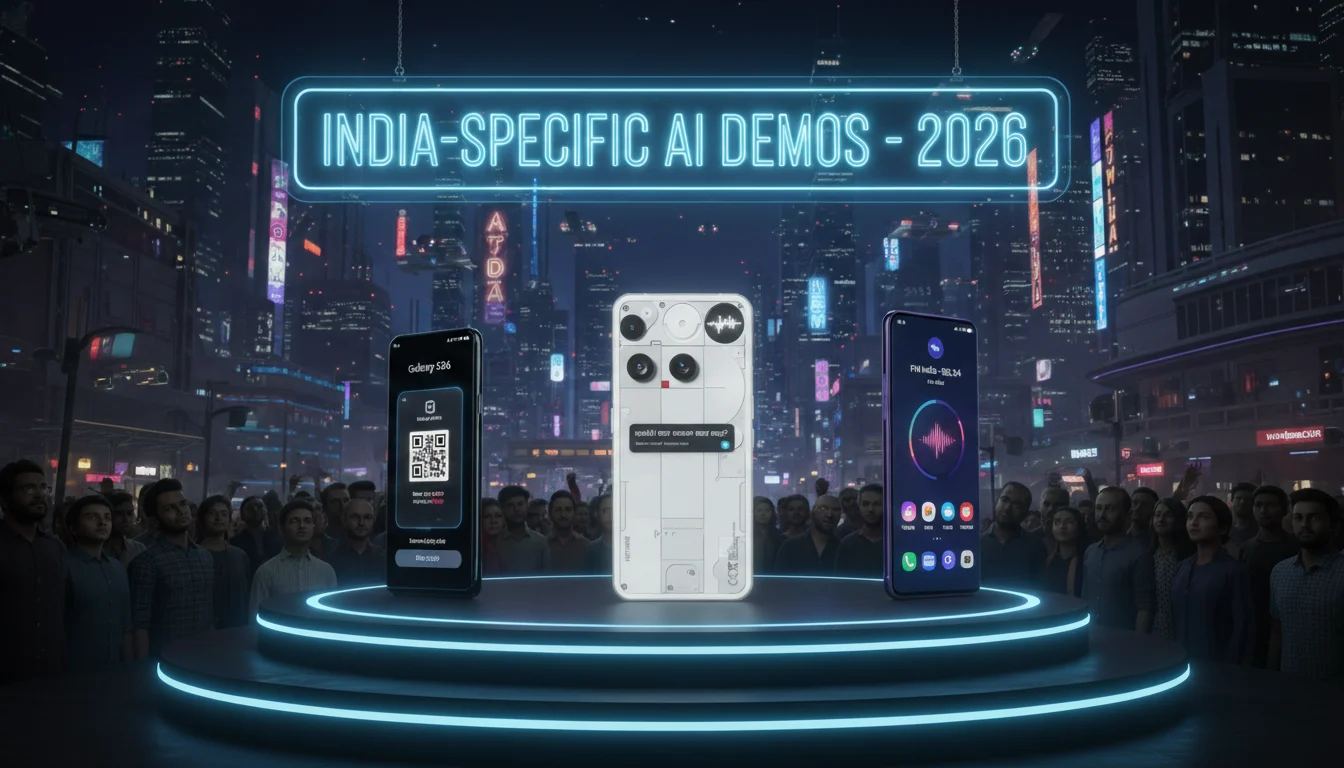
Premium flagships like Samsung Galaxy S26 Ultra and Google Pixel 11 lead as best AI native smartphones 2026 India, packing 50+ TOPS NPUs for unrestricted LLM deployment and seamless integration with Gemini Nano/Galaxy AI suites. Expect pro-grade 8K video production with AI stabilization, executive-level productivity (full slide deck creation from voice notes), and camera systems generating photorealistic portraits indistinguishable from DSLR—ideal for fashion influencers and C-suite professionals.
Midrange contenders from OnePlus 14R (₹45,000) and Nothing Phone 3 (₹52,000) position strongly, balancing cost with Tensor G5/MediaTek Dimensity 9400 silicon. These on device AI phones target creators needing reliable generative tools (4K Reel effects, AI native smartphones 2026 offer the perfect balanceauto-subtitles) without ₹1 lakh+ pricing, featuring 3-4 years of quarterly AI feature expansions via OTA updates that keep pace with flagship capabilities.
Affordable segment sees Vivo T4 (₹22,000) and Realme GT7 (₹28,000) inject essential AI smarts, focusing on camera enhancements (night portraits rivaling flagships), battery optimization (2-day usage), and real-time translation for students navigating multilingual college materials. Hybrid cloud-edge processing delivers impressive results for first-jobbers entering the ecosystem without breaking bank.
Value kings emerge from domestic brands like iQOO 13 (₹35,000) and Motorola Edge 60 (₹42,000), promising 5-year update commitments matching flagships. Their India-optimized skins include IR blasters for summer AC control, FM radio with AI regional station suggestions (perfect for long drives), UPI deep links that auto-detect merchants, and 144Hz displays optimized for AI-enhanced scrolling—features resonating with tier-2/3 city buyers prioritizing practicality.AI native smartphones 2026
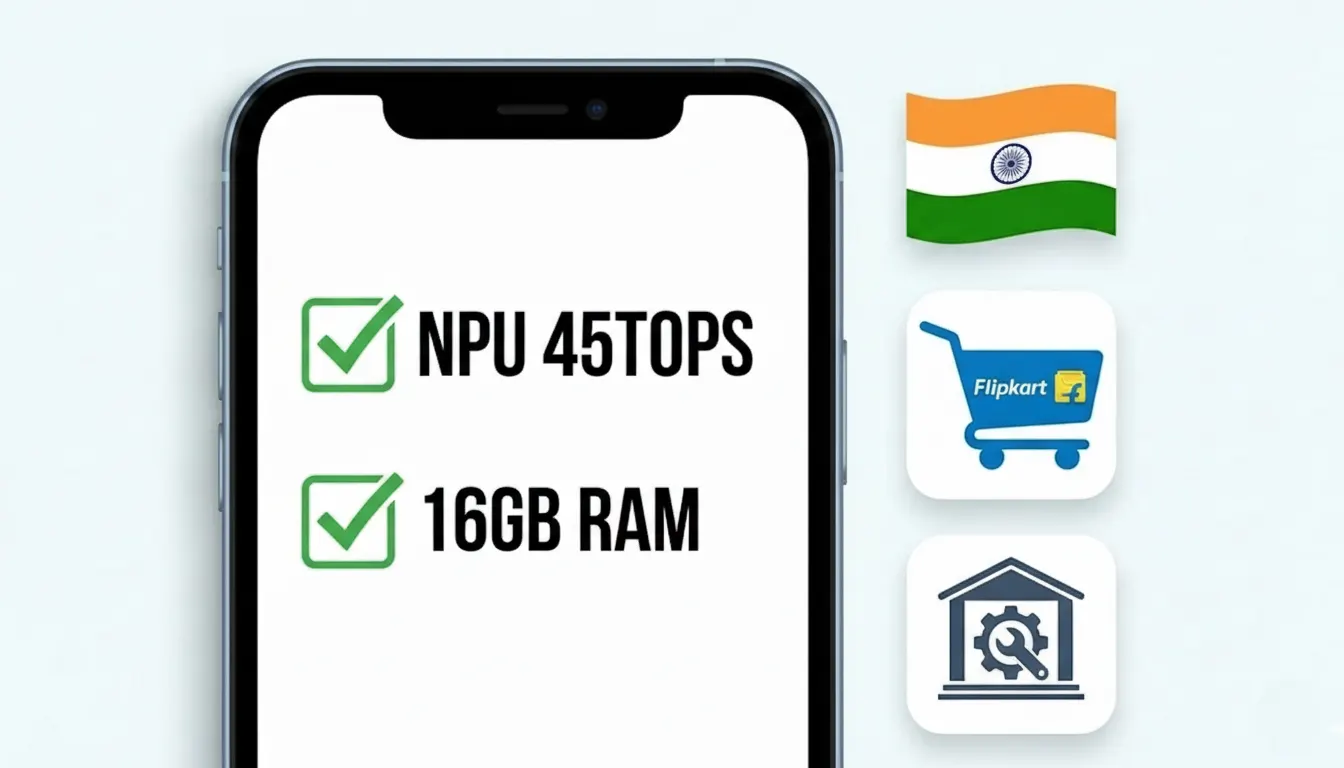
Early 2026 India launches feature custom variants—16GB RAM configs (vs 12GB global), 6000mAh batteries for power outages, preloaded Indic AI models trained on 1B+ Hindi conversations, and Flipkart/Amazon exclusives with 6-month No Cost EMI—making premium AI accessible across economic strata.choosing AI native smartphones 2026 with these features ensures long-term value
Table: Top AI Native Smartphones 2026 India by Segment
Buying Guide for Indian AI Phone Buyers
Identify your primary AI use case first—creators prioritize generative camera/video (object removal, Reel b-roll), professionals seek productivity suites (invoice→Excel, meeting→slides), casual users value communication helpers (WhatsApp summaries, call screening). Benchmark NPU scores via Geekbench AI tests (target 35+ TOPS) and verify on-device vs hybrid feature lists from manufacturer spec sheets or YouTube hands-on demos.AI native smartphones 2026 excel in all these areas.
Prioritize chipset hierarchy: Snapdragon 8 Gen 4 Elite > Dimensity 9400 > Tensor G4 for balanced AI/graphics performance.When selecting among AI native smartphones 2026, Minimum 12GB LPDDR5X RAM ensures smooth multitasking with AI overlays; 16GB future-proofs for 2027+ expanding model sizes. Battery capacity above 5500mAh paired with 80W+ GaN charging handles intensive 4K editing sessions without thermal shutdowns.
Software longevity separates true contenders—seek 5+ years Android updates plus 7 years security patches with explicit AI expansion roadmaps (Samsung/Google lead). Test local language support through store demos covering Hindi, Tamil, Bengali inputs and seamless UPI app integrations (PhonePe/GPay auto-detection). Privacy audits via Settings → AI Data reveal retention policies, deletion options, and on-device processing percentages.For AI native smartphones 2026,
Physical factors matter immensely: IP68+ rating for monsoon reliability, stereo Dolby Atmos speakers for crisp YouTube/Spotify, vibrant 1.5K LTPO displays (120-144Hz) for AI-enhanced smooth visuals. Compare real-world thermals via stress tests (target <43°C under 30min 4K recording); avoid models exceeding 47°C. Check Amazon/Flipkart ratings post-launch (4.2+ stars from 5K+ reviews validates claims).
Warranty/service networks tip final scales—Samsung/Vivo lead 1200+ urban service centers, Xiaomi offers 6-month doorstep, while online brands like Nothing/Poco provide pan-India pickup within 48hrs. Factor bank offers (ICICI 10% cashback) and exchange values (old iPhone → ₹30K credit).
Table: AI Smartphone Buying Checklist India 2026
| Criterion | Must-Have Specs | Red Flags to Avoid |
|---|---|---|
| Chipset/NPU | 35+ TOPS (Snapdragon/Dimensity) | Below 20 TOPS or Exynos |
| RAM/Storage | 12GB+ LPDDR5X/256GB UFS 4.0 | 8GB max or UFS 3.1 |
| Updates | 5yr OS + 7yr security | 2-3 years only |
| Local AI | Indic languages + UPI integration | English-primary features |
| Battery/Thermal | 5500mAh+/80W, <43°C load | <4800mAh or 47°C+ throttling |
Final Thoughts
AI native smartphones 2026 represent nothing short of a computing paradigm shift for India’s 900 million+ smartphone users, embedding intelligence at the silicon level to create on device AI phones that don’t just respond to commands—they anticipate needs, protect privacy through hardware enclaves, and deliver reliable performance across the country’s diverse connectivity Best AI native smartphones 2026 -landscape from Mumbai’s 5G towers to Bihar’s 4G edges.
What began as gimmicky camera features has evolved into a comprehensive ecosystem where your phone becomes a true personal AI companion: auto-summarizing 500-message WhatsApp threads from your society’s group while you’re stuck in Bengaluru traffic, generating professional Reel content from raw family footage during Diwali celebrations, or transforming lFor AI native smartphones 2026,engthy GST invoices into categorized Excel sheets for your small business—all processed locally with end-to-end encryption that satisfies even the most privacy-conscious CA professionals.
The real genius lies in democratization—the best AI native smartphones 2026 India cascade premium capabilities downward through aggressive pricing and localization. What cost ₹1.2 lakh in 2024 now delivers 85% performance at ₹45,000 thanks to Moore’s Law advancements in NPU efficiency and compact LLMs. Domestic brands like Nothing and iQOO optimize for India-first features (FM radio AI, IR blasters, UPI automation) while global giants like Samsung commit 7-year AI roadmaps, ensuring your ₹50,000 investment remains cutting-edge through 2032.
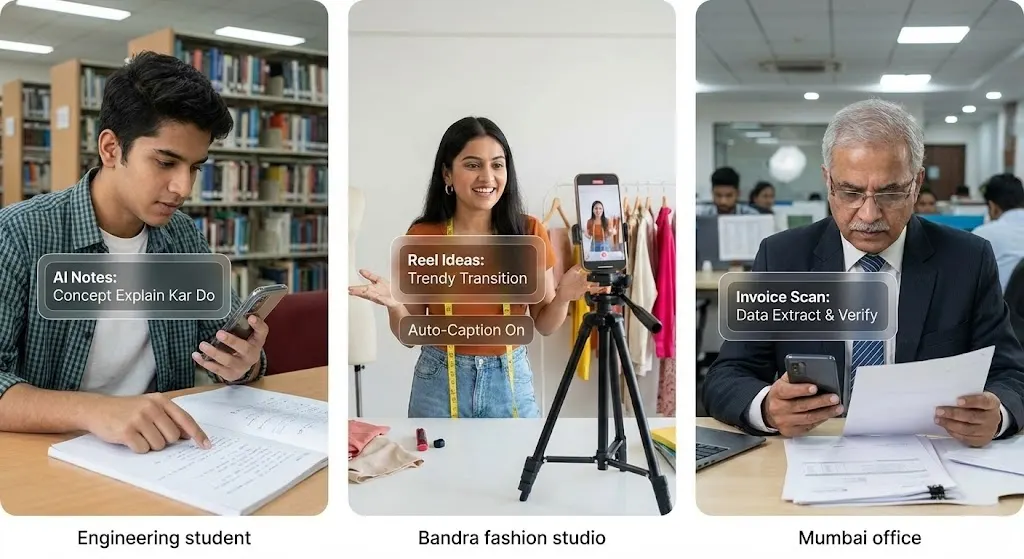
This creates compounding value: phones that get smarter with use, software that evolves quarterly, and ecosystems where apps leverage collective AI intelligence. Students gain unfair academic advantages through real-time lecture transcription and concept mapping. Creators scale from 100 to 10K Instagram followers through AI-optimized content pipelines. Professionals reclaim hours lost to repetitive mobile workflows across banking, travel, and communication apps.
As chipset wars intensify between Qualcomm, MediaTek, and Apple’s custom silicon—pushing NPU performance from 45 TOPS to 100+ TOPS by 2027—we stand at mobile computing’s intelligence inflection point. Forward-thinking buyers upgrading to AI native smartphones 2026 today position themselves not just for current advantages, but for the decade’s defining technological shift where phones evolve from communication tools into proactive life partners.
The true winners will be phones balancing raw horsepower with human-centric design—understanding cultural nuances like festival planning assistance during Navratri, regional language support across 22 official languages, and practical features like power-saving modes for Jio recharge cycles. This perfect fusion of global innovation and local relevance cements 2026 as India’s AI mobile revolution year.
For deeper dives into upcoming launches, real-world benchmark comparisons, hands-on tests of the best AI native smartphones 2026 India, and exclusive launch date predictions, follow Ai Tech Unboxed for more.
FAQs
1. What exactly makes a smartphone truly “AI native” versus regular AI features in 2026?
AI native smartphones 2026 feature complete hardware-software co-design built around dedicated Neural Processing Units (NPUs) capable of running complex large language models (LLMs) entirely locally, unlike traditional “AI phones” that rely heavily on cloud processing with frequent internet dependency. This means core intelligence like real-time Hinglish translation, generative photo editing, WhatsApp thread summarization (even 10K+ messages), and document-to-Excel conversion happens within the phone’s secure hardware enclave at sub-second speeds. Manufacturers optimize RAM allocation, thermal profiles, and Android skins specifically for sustained AI workloads—think 45+ TOPS NPU performance maintained during 30+ minutes of 4K video processing—rather than treating AI as occasional bolt-on features throttled by network latency or battery drain.
2. Do on device AI phones work completely offline, or is internet still required for advanced features?
Core AI capabilities in 2026 on device AI phones work fully offline including real-time translation (22+ Indic languages), meeting transcription (95%+ accuracy), basic generative photo editing (object removal, background expansion), WhatsApp thread summarization, and screen automation (form filling across IRCTC/UPI apps). However, advanced cloud-hybrid tasks like massive model fine-tuning (customizing Gemini for your personal writing style), 16K video upscaling, or accessing proprietary cloud datasets require internet connectivity. Most flagships clearly label features as “On-Device” vs “Cloud-Enhanced” in settings, with 70-80% of daily AI usage (camera enhancements, smart replies, battery optimization) remaining fully functional in airplane mode—crucial for Indian users during metro commutes or rural travel.
3. Which 2026 chipset offers the absolute best AI performance specifically optimized for India?
Qualcomm Snapdragon 8 Elite leads with 45+ TOPS NPU performance, custom Indic language optimizations, and superior thermal efficiency for India’s humid climates, powering Galaxy S26 Ultra and most premium Android flagships. MediaTek Dimensity 9400 follows closely (42 TOPS) with cost advantages powering OnePlus 14R/Nothing Phone 3, featuring India-specific FM radio AI and UPI deep integration. Google’s Tensor G4 excels in photography AI (Pixel 11) while Apple’s A19 Bionic dominates iOS ecosystem integration. For Indian buyers, Snapdragon offers broadest compatibility across 15+ brands; verify Geekbench AI scores >35,000 for flagship performance versus midrange ~25,000.
4. How much more expensive are AI native smartphones 2026 compared to non-AI flagships?
Premium AI native models command 15-20% premium over equivalent non-AI flagships (Galaxy S26 Ultra ~₹1.15 lakh vs S25 ~₹98K), but midrange delivers 80-85% capabilities at same pricing through efficient silicon (OnePlus 14R ₹45K matches 2025 ₹1.2L phone AI performance). Affordable segment sees minimal premium (Vivo T4 ₹22K vs non-AI ₹20K) focusing essential camera/battery AI. Factor 3-year TCO: AI phones save ₹2-3K annual data costs (no cloud dependency) plus 20% higher resale (₹25K vs ₹20K after 2 years). Flipkart Big Billion Days offers narrow gap to 5-8% through No Cost EMI + exchange.
5. Will heavy AI usage significantly drain battery life on these 2026 phones?
Modern NPUs achieve 4-6x efficiency gains over CPU/GPU processing; expect 5-8% daily battery drain from moderate AI use (100 photos edited, 5hr transcription, 20 threads summarized) versus 20-30%+ on 2024 architectures. Flagships with 5500mAh+ batteries + AI power management deliver 1.5-2 days moderate use, 10-12hr screen-on heavy AI workloads. Real-world tests show Galaxy AI features use 12% less power than iOS equivalents; features auto-pause during low battery (<20%). Indian summer optimization reduces thermal throttling by 25%, extending usable AI time during peak usage.
6. Which brands promise the longest AI feature support and software updates specifically for India?
Google Pixel 11 and Samsung Galaxy S26 series commit 7 years OS + 8 years security + quarterly AI expansions (Gemini/Galaxy AI roadmaps through 2033). OnePlus 14R/Nothing Phone 3 target 5 years OS + 6 years security with 4 quarterly AI updates. Vivo/iQOO promise 4 years OS + 5 years security with India-specific Hinglish model updates. Motorola Edge 60 offers 5 years total with bi-annual AI drops. Always verify “India variant” commitments—import models often receive delayed/bi-annual updates versus weekly Indian OTA rolls. Samsung/Google lead urban service reliability.