

Learn the main generative AI limitations for creators and marketers, including accuracy, originality, and quality concerns that affect content work.
Why Generative AI Limitations Are the Biggest Blind Spot for Creators in 2026
There is a version of AI-assisted content creation that works beautifully. You have a clear idea, AI helps you structure and draft it quickly, and you refine it into something genuinely useful. That version exists, and plenty of creators use it effectively every day.
But there is another, more common version — one where a creator publishes dozens of AI-generated posts, waits for traffic to climb, and slowly realizes that something is off. Rankings are inconsistent. Readers aren’t staying long. Engagement is thin. The content looks fine, but it’s not performing. What makes it even more puzzling is that the reason is rarely obvious at first glance.
The answer, in most cases, comes down to understanding the real generative AI limitations — the ones that don’t show up in demo videos or product landing pages, but quietly shape the quality of everything you publish.
Generative AI has genuinely lowered the barrier to entry for content creation. Someone with no writing background can now produce a polished-looking blog post, newsletter, or ad copy in minutes. That is a remarkable shift. But lowering the barrier to entry also means lowering the bar for quality — and when everyone is doing the same thing, average content becomes the norm rather than the exception. This is where generative AI limitations begin to surface.
The challenge is not that AI produces bad content. It’s that AI produces predictable content. It follows patterns. It reaches for the safest, most likely phrasing. It explains rather than challenges. It describes rather than demonstrates. Over time, that predictability becomes noticeable — to readers, to search engines, and to anyone who has spent enough time reading across your niche.
For marketers, this creates an additional layer of risk. Marketing is not just about getting information in front of people — it is about moving them. It is about creating moments of recognition where a reader thinks “yes, that is exactly my problem” or “I hadn’t thought of it that way.” These moments require empathy, insight, and judgment — qualities that highlight some of the most important AI tool weaknesses in real content workflows.
This guide is not about fear-mongering or dismissing AI. It is about being honest about where these tools fall short, so you can use them with clear eyes. We will walk through the generative AI limitations for creators and marketers section by section — from content creation and SEO to real-world workflow issues and practical strategies. The goal is to help you build something that AI alone cannot: content that actually earns trust.
📌 In This Guide, You Will Learn:
✅ What generative AI limitations actually mean for content quality in 2026
✅ How AI tool weaknesses directly affect SEO rankings and audience engagement
✅ Why over-relying on AI weakens your long-term brand authority
✅ Proven strategies creators and marketers use to build a smarter human-plus-AI workflow
✅ Real-world risks of generative AI limitations in finance, health, and legal niches
Table of Contents
Understanding Generative AI Limitations in Content Creation
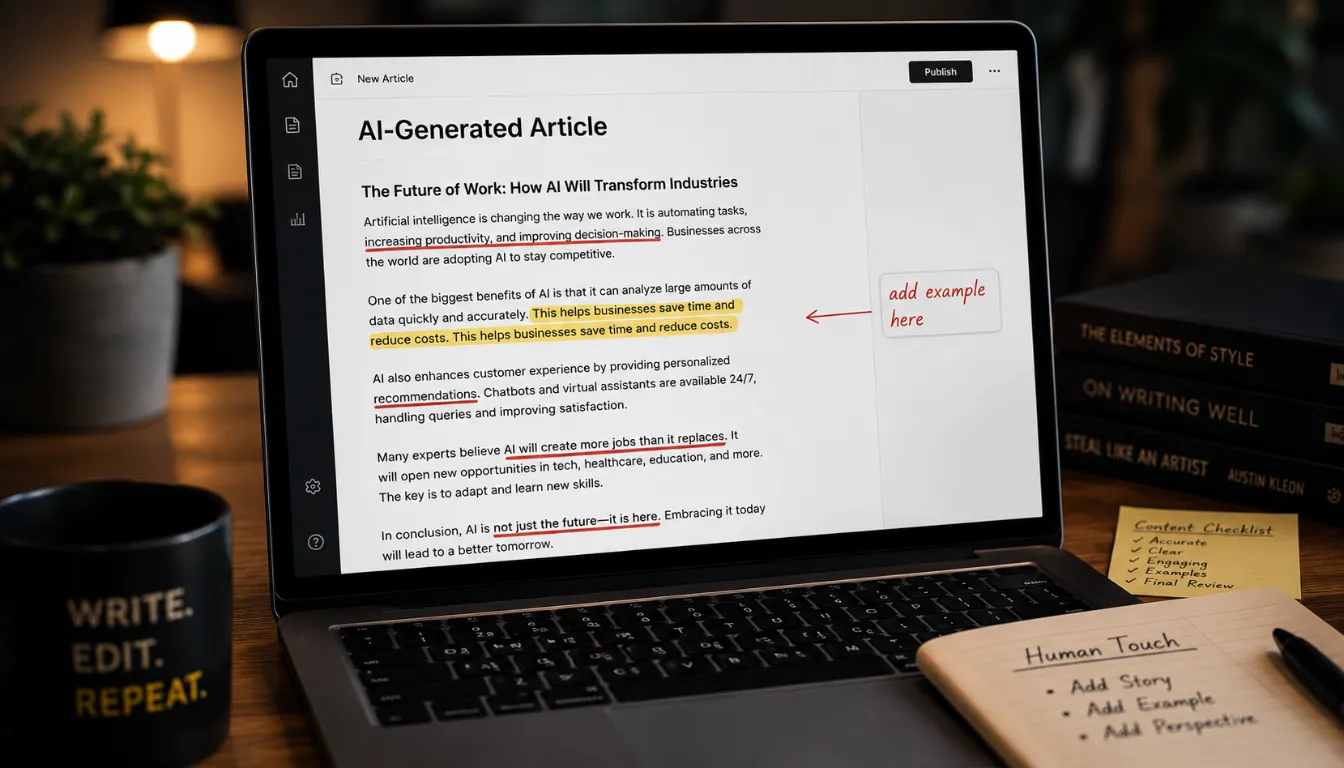
Before you can work around the limitations of AI in content creation, you need to understand something fundamental about how these systems work. Generative AI does not think. It does not know things. What it does is predict — given a prompt, it generates the most statistically likely sequence of words based on patterns it learned during training.
This is not a flaw in the technology. It is the nature of the technology. But it becomes a problem when creators treat AI output as if it reflects genuine understanding, verified knowledge, or thoughtful analysis. It doesn’t. And that gap — between the appearance of expertise and actual expertise — is where most generative AI limitations in content creation originate.
The Hallucination Problem Is More Subtle Than You Think
Most people have heard of AI hallucinations — cases where AI confidently generates false information. But in practice, the danger is less often a dramatic fabrication and more often a subtle inaccuracy that slips through. This is one of the most critical generative AI limitations to understand before scaling content. AI might:
- Attribute a feature to a software tool that was removed in a previous update.
- Cite a statistic that “sounds right” but has no verifiable source.
- Merge details from two different products into a description of one.
- Reference an older version of a platform’s pricing or policy.
These errors are hard to catch because they blend seamlessly into otherwise accurate content. For a tech-focused site that reviews AI tools or smartphones, even one or two such errors per article can quietly damage the credibility you’re working hard to build. Readers who catch mistakes — even small ones — tend not to come back.
Surface-Level Writing That Looks Deep But Isn’t
One of the more frustrating generative AI limitations is how competently AI can explain the obvious. Ask it to explain what generative AI is, and it will give you a technically accurate, well-structured paragraph. Ask it to explain the limitations of generative AI, and it will produce a reasonable-sounding list.
But push it further — ask it to explain why a particular limitation matters to a specific type of creator, or what the downstream consequences look like after six months of relying on AI — and the quality drops sharply. AI struggles with:
- Consequences that play out over time rather than immediately.
- Nuance that depends on context, audience, or industry.
- Insights that come from failure, experimentation, or personal judgment.
- The kind of contrarian thinking that makes content memorable.
This is why AI content often feels like a competent summary of what is already widely known — useful for broad overviews, but not enough to establish genuine authority in a crowded niche.
Repetition Across Content — A Problem That Compounds
A single AI-generated article may seem fine in isolation. But when you publish 20, 30, or 50 of them, patterns start to emerge that readers and algorithms can detect. Introductions often follow the same rhythm: three sentences of context, one sentence introducing the challenge, one sentence previewing the article. Conclusions often restate the introduction in slightly different words. Transitions are predictable. The same adjectives appear across different topics.
This structural sameness creates a subtle but persistent problem: your site begins to feel templated. Different subjects, same voice. And when a site feels templated, it becomes forgettable — which is arguably worse than being controversial or imperfect.
Tone Without Personality
AI does not have a personality. It has a default register — competent, neutral, vaguely professional — that it applies broadly unless specifically guided otherwise. For brands and creators trying to build a distinctive voice, this is a real limitation. A voice is not just about word choice — it is about attitude, rhythm, what you choose to emphasize, what you’re willing to say directly, and what you deliberately leave unsaid.
AI tends to sand all of that down into something smooth and inoffensive. The result is content that sounds like it could have been written by any brand in any industry — and that kind of forgettable content rarely builds a loyal audience.
Limited Contextual and Cultural Nuance
One more layer of AI tool weaknesses that creators rarely discuss is contextual awareness. AI does not intuitively understand the lived context of your audience: local references, industry inside jokes, cultural sensitivities, or regional realities. Without careful prompting and editing, this can lead to content that is technically correct but emotionally disconnected from the people you are actually trying to reach.
| Limitation | Real Impact on Content |
|---|---|
| Pattern-based generation | No true understanding or reasoning |
| Hallucinations | Risk of misinformation and credibility damage |
| Surface-level depth | Weak authority and “me too” content |
| Repetitive structure | Site feels templated and unoriginal |
| Tone inconsistency | Poor readability and weak brand identity |
The most important mindset shift is this: AI output is raw material, not finished content. Treat it like a rough sketch that needs your thinking, your experience, and your judgment before it is ready to publish.
AI Tool Weaknesses in Marketing and SEO Strategy
Marketing is fundamentally about human behavior — understanding what people want, what they fear, what they are trying to accomplish, and how to position your offer within that context. It requires strategic thinking, emotional intelligence, and the ability to make judgment calls that aren’t always supported by data. These are precisely the areas where AI tool weaknesses surface most visibly.
The Search Intent Gap Is Bigger Than It Looks
Search intent is not just about matching a keyword — it is about understanding the complete picture of why someone is searching, what they already know, and what would actually help them move forward. AI is reasonably good at the first part but often misses the rest.
Consider someone searching for “generative AI limitations for content creators.” They are probably not looking for a basic definition. They are likely frustrated by inconsistent results, curious about why their AI-generated content is not ranking, or trying to justify a workflow change to their team. They want practical clarity, not a dictionary entry.
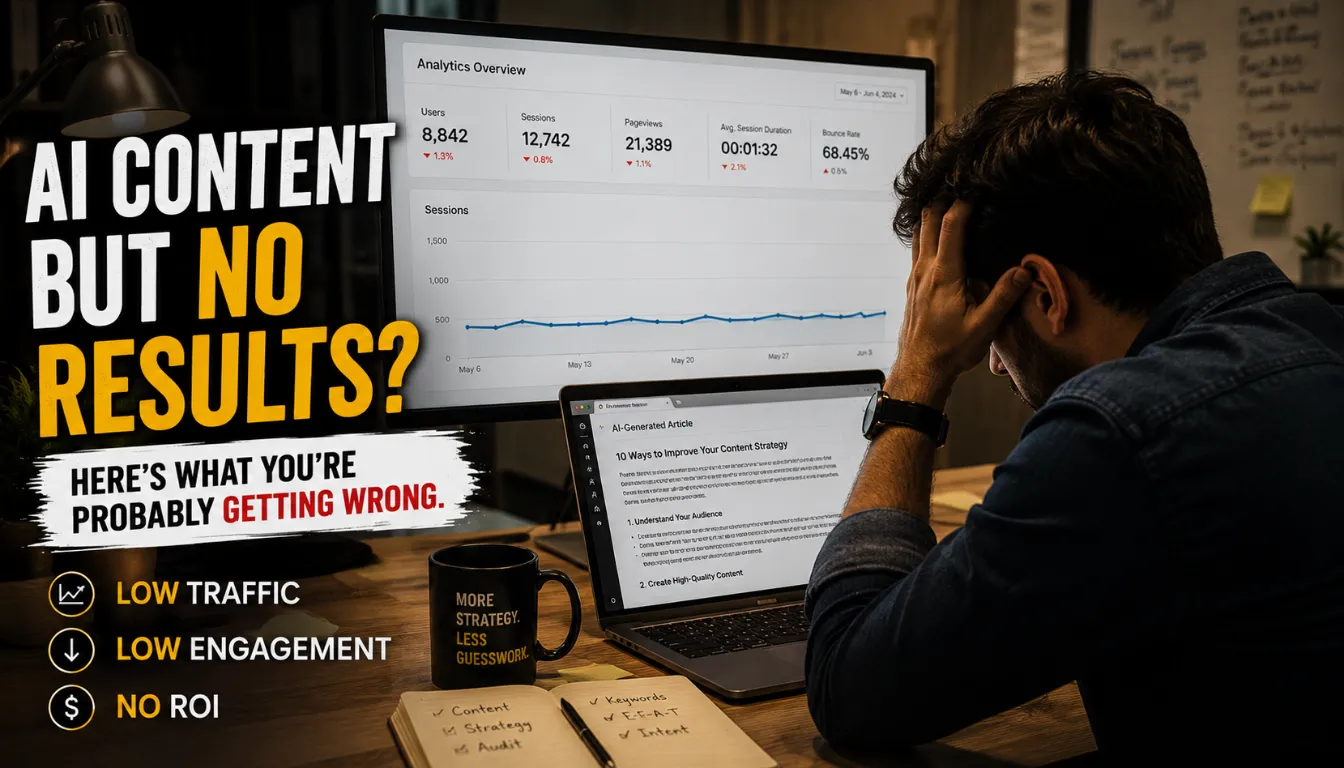
AI tends to answer the literal question rather than the underlying one. It generates content that satisfies the keyword without fully satisfying the searcher — and that distinction, invisible on the surface, shows up clearly in bounce rate, time-on-page, and conversion data.
SEO Is a Strategy, Not a Checklist
AI can place keywords, format headings, and suggest meta descriptions. What it cannot do is build an intelligent SEO strategy from scratch. Real SEO involves decisions like:
- Which subtopics need their own dedicated articles versus being covered in a section.
- How to build topical authority by connecting related pieces through internal linking.
- When to go broad versus deep on a given keyword cluster.
- How to differentiate your angle from the five existing articles already ranking.
These are architectural decisions that require understanding your site, your audience, your competitors, and your long-term goals. AI has none of that context unless you explicitly provide it — and even then, it lacks the judgment to weigh those factors the way an experienced SEO professional would.
Marketing Copy Requires Emotional Precision
There is a reason experienced copywriters are still highly valued despite the rise of AI writing tools. Good marketing copy is precise in its emotional effect. It knows exactly when to create tension and when to release it. It knows how to use specificity to build credibility. It knows when a reader needs reassurance versus a push.
AI produces copy that is emotionally blunt. It can write something technically correct that still fails to move anyone. Compare:
AI version: “This tool helps marketers save time on content creation.”
Human version: “Most marketers I talk to spend two hours every Monday just deciding what to write about. This tool eliminates that.”
The second version connects because it reflects real experience. AI rarely achieves that kind of specificity without heavy human guidance.
Brand Differentiation Is Impossible at the Average
AI generates content from the center of the distribution — the most common way of saying things, the most typical angles, the safest conclusions. But differentiation requires being somewhere other than the center. It requires taking positions, having opinions, being willing to say things that not everyone will agree with.
A brand that sounds like everyone else will never stand out — regardless of how well-optimized its content is. This is one of the most underappreciated AI tool weaknesses for marketers building long-term brand equity.
Lagging Behind Fast-Moving Trends
While some tools are getting better with fresher data, many AI systems still lag behind current algorithm changes, platform shifts, and audience behavior trends. Advice generated about “what works” in content or SEO may be based on outdated patterns — which quietly puts your strategy behind before it even launches.
| Weakness | SEO and Marketing Impact |
|---|---|
| Poor intent matching | High bounce rate and low dwell time |
| Weak keyword placement | Missed ranking potential |
| Lack of emotional depth | Low conversions and weak engagement |
| Generic output | No clear brand differentiation |
| Outdated trend awareness | Strategies that feel behind the market |
Strong marketing is built on insight and positioning, not just content volume. AI can support both — but only when guided by someone who understands what the brand is trying to achieve.
Generative AI Limitations for Creators and Marketers in Real-World Use
The real-world experience of using AI is often quite different from the way it is marketed. The pitch is: faster content, more output, less effort. The reality is more complicated — and understanding the actual generative AI limitations for creators and marketers in day-to-day use helps you plan your workflow more honestly.
The Hidden Time Cost of Editing
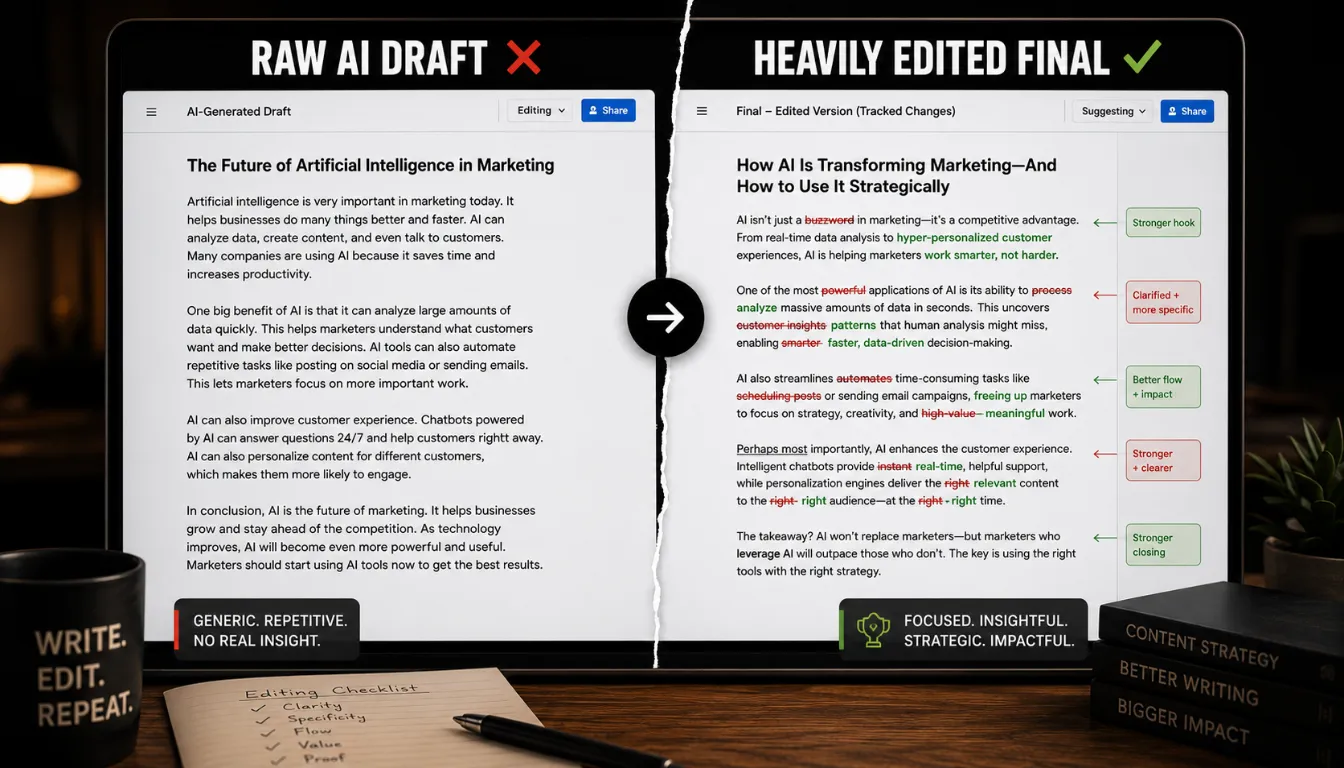
AI does save time on first drafts. That part is undeniable. But the time savings are not as dramatic as they appear because editing AI content is a distinct and often underestimated task. It is not like editing your own writing, where you know what you meant and are just refining how you said it. Editing AI content involves:
- Deciding whether each claim is actually accurate.
- Identifying where the content is too vague and needs a real example.
- Rewriting sections that sound generic or robotic.
- Restructuring arguments that don’t quite flow logically.
- Injecting your brand voice throughout.
For long-form content especially, this editing process can take nearly as long as writing a draft yourself — particularly if you have high standards for accuracy and voice.
Your Brand Voice Gets Lost Over Time
One of the quieter consequences of heavy AI reliance is brand voice drift. In the early days, you might be editing AI content closely and maintaining consistency. But as publishing pressure increases, edits become lighter. Gradually, your brand starts to sound less like you and more like a generic tech blog.
This matters because brand voice is one of the few sustainable competitive advantages a content creator has. Readers follow people and brands they find genuinely interesting. If your writing voice fades into the background, you lose the quality that makes people choose your site over the hundreds of others covering the same topics.
The Expertise Erosion Effect
This is perhaps the most important long-term risk that rarely gets discussed: when you outsource your thinking to AI, you gradually stop developing your own expertise.
Writing forces you to confront what you do and don’t understand. It pushes you to research, to form opinions, to test your assumptions. When AI handles that process instead, you skip the parts that make you smarter. Over months and years, creators who rely heavily on AI without staying actively engaged in their subject matter can find their own knowledge becoming shallower — which eventually affects the quality of even their edited AI content.
Similarity, Detection, and Trust
Modern AI detection tools are becoming more sophisticated — and so are the instincts of experienced readers. Content that is heavily AI-generated without meaningful human input tends to have recognizable qualities: predictable structure, certain common phrases, an absence of specific detail. Platforms, brands, and clients are increasingly aware of this.
The deeper problem goes well beyond whether AI content gets flagged. Readers who sense that a site is primarily AI-generated often treat the content as lower quality by default — even if individual pieces are accurate. Building authority requires demonstrating that there is a real, knowledgeable human behind the content.
Compliance and Accuracy Risks in Sensitive Niches
For creators in niches like finance, health, legal advice, or even certain areas of tech like cybersecurity, AI-generated content that is published without careful review can create real problems. AI does not know what it is not qualified to say. It will generate advice, recommendations, and explanations without flagging areas where professional judgment is required. These are not theoretical risks — brands have already faced credibility damage from unreviewed AI outputs in sensitive niches.
| Issue | Long-Term Impact |
|---|---|
| Bulk AI content | Declining rankings and weaker trust signals |
| Outdated information | Credibility loss with informed audiences |
| Inconsistent tone | Confusing and forgettable brand identity |
| No personal insights | Lower engagement and fewer return visitors |
| Compliance blind spots | Legal and reputational risk |
Understanding these real-world limitations helps you decide where AI should play a role in your workflow — and where it shouldn’t.
Advanced Strategies to Overcome Generative AI Limitations
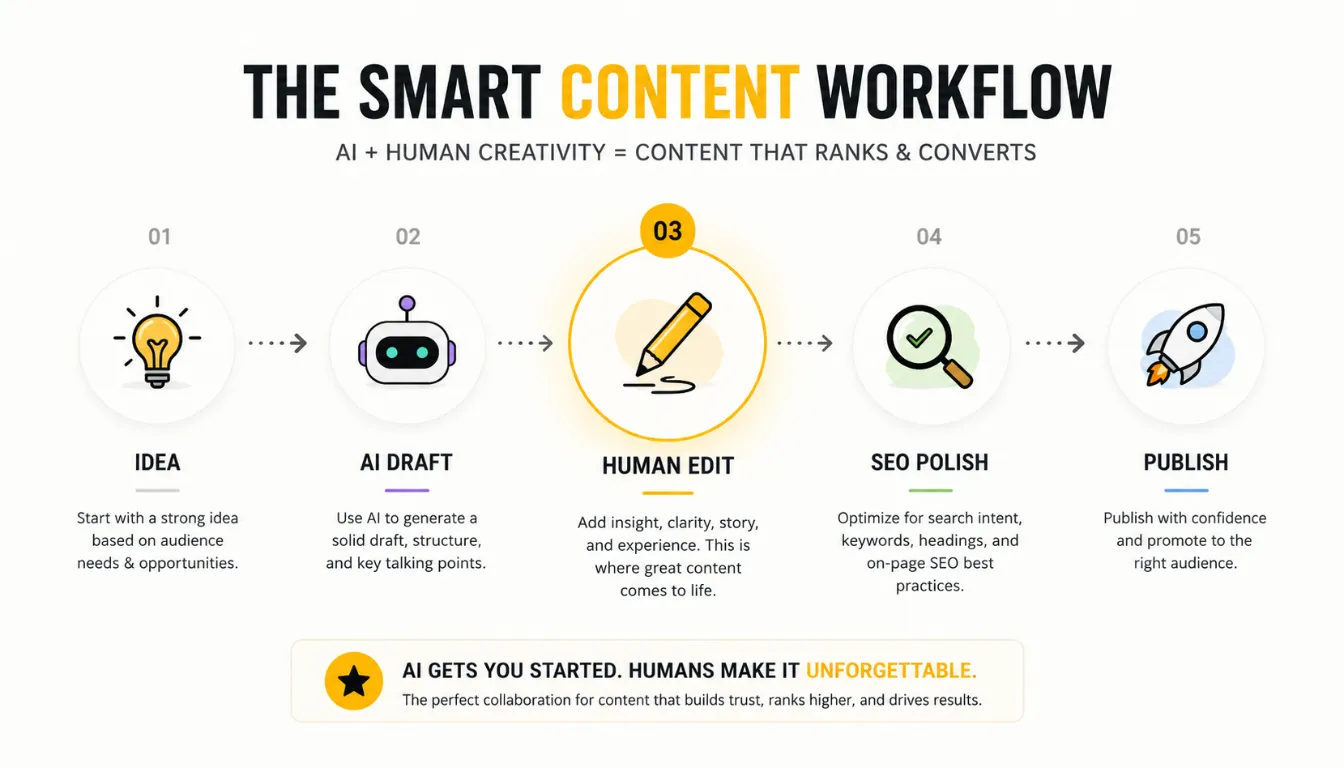
Understanding what AI cannot do well naturally points toward how to use it better. The goal is not to fight the tool — it is to build a workflow where human judgment is always in the driver’s seat and AI is handling the things it genuinely does well. Below are five practical strategies every creator and marketer can start applying today.
1. Use AI as a Research and Ideation Accelerator
Rather than jumping straight to generating full articles, use AI in the earlier stages of your content process. Ask it to:
- Generate 10 different angles for a topic you are already familiar with.
- Summarize common audience questions around a subject.
- Suggest subtopics that a comprehensive guide should cover.
- Draft an outline that you then restructure based on your own priorities.
This keeps your thinking at the center while AI handles the time-consuming parts of topic exploration.
2. Treat Every Draft as a Conversation Starter
One of the most effective ways to use AI drafts is to treat them as prompts for your own thinking rather than as near-complete documents. Read an AI-generated section and ask yourself: “What would I actually add to this?” That question often surfaces your most valuable insights — the examples, caveats, and opinions that only you can provide.
3. Build a Brand Voice Document and Use It Actively
Create a short, practical reference document that describes how your brand writes. Include:
- Tone descriptors (direct, curious, honest, not preachy).
- Examples of sentences you like versus sentences that feel off-brand.
- Specific phrases or structural habits to avoid.
- How you prefer to open articles and close sections.
Use this document while editing AI content so every piece is pulled back toward your voice rather than drifting toward AI’s default register.
4. Reserve Certain Content for Human-First Creation
Not all content should go through AI first. Identify the content that matters most for your brand authority — cornerstone articles, personal opinion pieces, detailed product reviews — and approach these as primarily human-written from the start. AI can assist in places, but the core thinking and voice should be yours.
5. Use AI Downstream From Original Content
Some of the best use cases for AI involve taking something you have already created and extending it:
- A podcast transcript turned into a blog summary.
- A long-form guide broken into a series of short social posts.
- A case study adapted into an email sequence.
Starting from original, human-first content and using AI to repurpose it gives you the efficiency benefits without the quality trade-offs.
| Step | Practical Approach |
|---|---|
| Ideation | Use AI to expand topic lists and angles |
| Drafting | Let AI generate a structured base draft |
| Editing | Add insights, stories, data, and refine tone |
| Optimization | Use SEO tools for internal links, headings, and clarity |
| Repurposing | Use AI to adapt the improved content into other formats |
Final Thoughts on Generative AI Limitations
Generative AI is not going away — and it shouldn’t. It is genuinely useful, and creators who dismiss it entirely are leaving real productivity gains on the table. But there is a meaningful difference between using AI as a tool you control and using it as a system you depend on without question. The distinction matters more than most people realize.
Understanding the generative AI limitations changes how you approach every piece of content. Instead of asking “what can AI generate for me today?” you start asking “where does this content need my thinking, and where can AI handle the scaffolding?” That mental shift is what separates creators who are genuinely building authority from those who are just building volume.
The best content has always come from people who have something real to say. It comes from someone who has tested a tool and found it frustrating in a specific way, or who has watched a strategy succeed and can explain exactly why, or who has an opinion that goes against the conventional wisdom in their niche. These are experiences AI cannot have and insights it cannot generate — no matter how sophisticated the model becomes.
For marketers, the pressure to get this right is significantly greater. Content is often the first interaction a potential customer has with your brand. It sets the tone for every relationship that follows. Generic, forgettable content does not just fail to rank — it actively shapes how people perceive your brand. In a market full of AI-generated noise, authenticity and specificity are not just nice to have. They are competitive advantages.
There is also the long-term dimension to consider. Search engines are continuously improving their ability to assess content quality — not through simple detection, but through engagement signals, topical depth, and evidence of genuine expertise. Content strategies built on high volume but low human investment will face increasing headwinds. Content strategies built on real insight, clear voice, and consistent value will continue to compound over time.
The sweet spot is not complicated. Let AI handle the repetitive, structural, and time-consuming parts of your workflow. Let your own thinking handle the meaning, the perspective, and the judgment calls. Build a process where every piece of content that goes out under your name reflects something genuinely worth reading — something AI could not have produced on its own.
That gap is not a flaw in the technology itself. That is the opportunity it creates for every creator and marketer who understands the real generative AI limitations for creators and marketers and chooses to work smarter because of them.
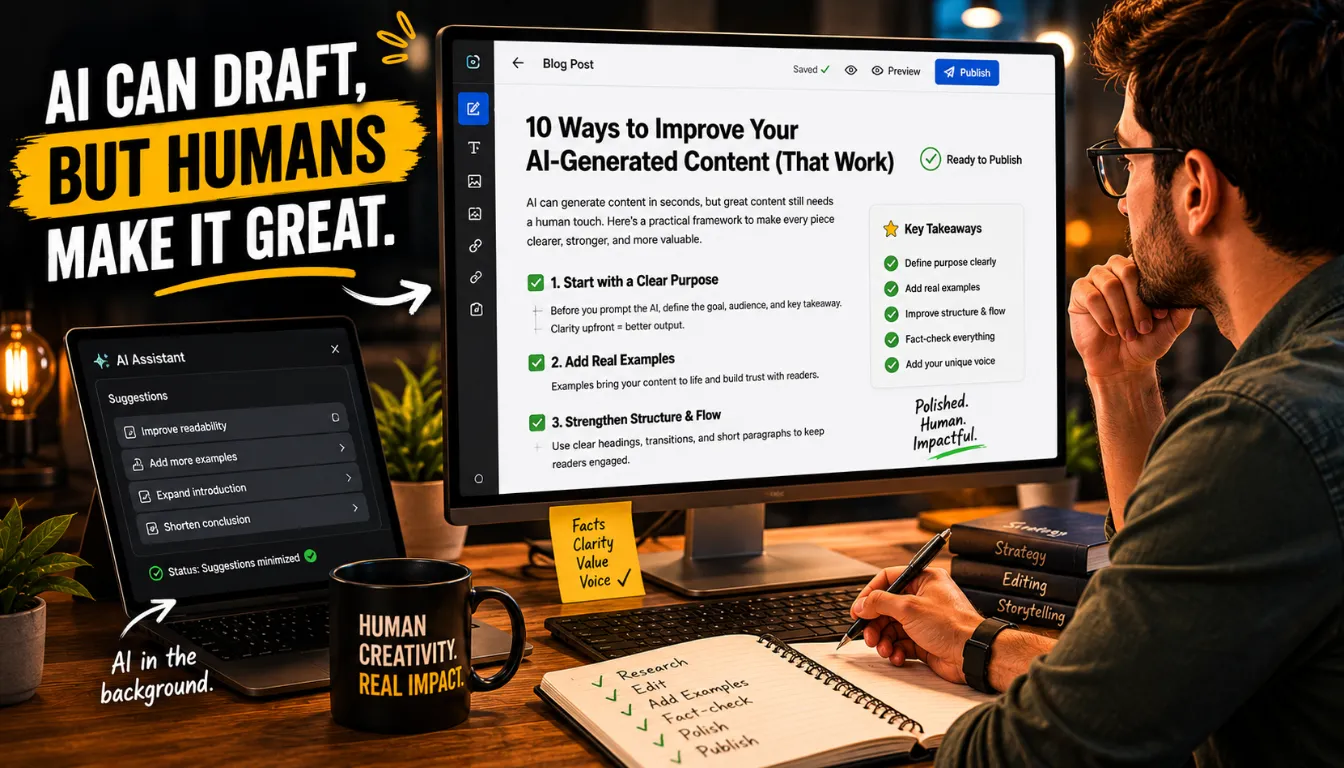
AI can help you create content faster — but only your insight, your experience, and your voice can make that content truly worth reading.
Follow Ai Tech Unboxed for more insights on AI tools, content strategy, and the latest in tech.
India Context: AI Content Rules and Client Expectations
Indian content teams face the same generative AI limitations as everyone else, but with added local pressure: many agencies and in-house teams are now required by clients to disclose AI-assisted content, especially for finance, health, and legal niches regulated under IT Rules and SEBI/RBI advertising guidelines. Freelance writers and small agencies competing on platforms like Upwork or with domestic clients often face rate pressure to use AI-heavy workflows, which is exactly where thin, generic content shows up first and hurts long-term client retention. If you’re writing for Indian audiences, generic AI drafts also tend to miss regional context, price sensitivity, and colloquial search intent (e.g., “best AI tools under budget” or state-specific queries), so human editing matters even more here than in generic global content.
Frequently Asked Questions
1. What exactly are generative AI limitations for content creators?
Generative AI limitations refer to the specific gaps where AI tools consistently fall short in content creation — including the inability to reason, verify facts, maintain a consistent brand voice, or produce genuinely original insights. These limitations are especially noticeable in long-form content, expert-level writing, and niche-specific topics that require real-world experience.
2. How do AI tool weaknesses affect SEO performance?
When content lacks depth, originality, or proper search intent alignment — all common results of unedited AI output — it performs poorly on key engagement metrics like dwell time, scroll depth, and return visits. These signals influence rankings. Additionally, AI-generated content often misses the strategic content architecture needed for topical authority.
3. Can AI-generated content still rank on Google in 2026?
Yes, but with conditions. Google’s focus is on helpfulness and expertise, not on how content was generated. AI-generated content that is thoroughly edited, fact-checked, enriched with real examples, and aligned with user intent can rank well. The issue is that most AI content published without meaningful human input does not meet that bar.
4. What is the best way to overcome generative AI limitations?
The most effective approach is a hybrid workflow — using AI for ideation, structure, and drafts while reserving editing, insight, and voice for human input. Creating a brand voice guide, prioritizing original research, and identifying which content types should be human-first are all practical steps toward better outcomes.
5. Is it possible to over-rely on AI as a content creator?
Absolutely, and it is more common than people admit. Over-reliance on AI can gradually erode your own writing skills, reduce your motivation to do original research, and create a brand voice that drifts away from what makes your content distinctive. The best creators use AI as a support system — not as a replacement for their own thinking.
Understanding generative AI limitations is essential for building a sustainable content strategy. For more on how AI is reshaping digital publishing, read our guide on best AI tools for content creators.
For deeper research on this topic, Google Research regularly publishes findings on the state and limitations of large language models, offering valuable context for creators and marketers relying on AI tools.
Generative AI limitations aren’t a reason to avoid these tools — they’re the context for using them wisely. Treat AI output as a first draft, keep your own research and voice at the center, and build simple editorial checkpoints for fact-checking and tone. That balance is what lets creators use AI efficiently without losing the authority and originality that actually earns trust with readers and search engines.
Also Read: More AI & Tech Insights
Nano Banana AI Hacks: The Complete Guide
7 Powerful Changes OpenAI Stargate Brings to AI Data Centers
AI SEO Workflow for Beginners 2026 – Step-by-Step Guide
7 Shocking Meta AI Features Marketers Must Know
Ultimate breakthrough in 3D model creation that you must watch now


Great content! Keep up the good work!